


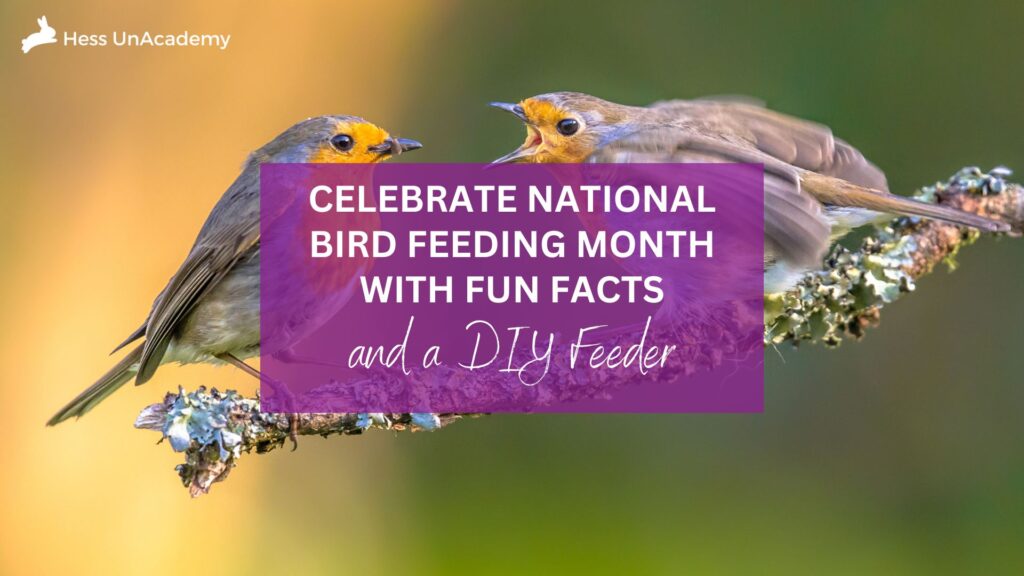
Discover fun bird facts and a DIY bird feeder project to attract feathered friends to your backyard this February!
February is National Bird Feeding Month, the perfect time to celebrate and learn about our feathered friends. Whether you’re a homeschooler looking to incorporate nature into your lessons or simply a bird enthusiast, this month offers a great opportunity to engage with the avian world. Birds play a vital role in our ecosystems and feeding them during the colder months can make a significant difference. Let’s dive into some fun and surprising facts about birds, and then we’ll share a fun DIY bird feeder project to bring birds closer to your home.


Easy Navigation
Fascinating Bird Facts
- There Are Over 10,000 Bird Species
Birds come in an incredible variety, from tiny hummingbirds weighing less than a penny to massive ostriches standing over 9 feet tall. Each species is unique, with its own behaviors, songs, and adaptations. - Birds Have Hollow Bones
This adaptation makes birds lightweight and capable of flight. Despite being hollow, their bones are incredibly strong, supporting the demands of flight. - Some Birds Can Mimic Human Speech
Parrots are well-known for their ability to mimic sounds, but did you know that ravens, mynah birds, and even some starlings can do the same? These birds are highly intelligent and use mimicry to interact with their environments. - Birds Are Descendants of Dinosaurs
Birds share a common ancestry with theropod dinosaurs like the Velociraptor. In fact, scientists consider modern birds to be living dinosaurs! - The Smallest Bird in the World
The bee hummingbird, found in Cuba, is the tiniest bird, measuring just 2 inches long. Despite its small size, it beats its wings up to 80 times per second! - Bird Migration Is a Marvel of Nature
Many birds travel thousands of miles during migration. The Arctic tern holds the record for the longest migration, flying from the Arctic to the Antarctic and back each year—a journey of about 25,000 miles. - Birds Have Excellent Vision
Birds like eagles and hawks have vision that is 4-8 times sharper than humans. This allows them to spot prey from great distances. - Some Birds Can Sleep While Flying
Birds like swifts and frigatebirds can sleep in short bursts while flying. This incredible ability helps them cover long distances during migration. - Birdsong Has a Purpose
Birds don’t sing just to sound pretty. Their songs serve purposes like attracting mates, marking territory, or warning of danger. - The Fastest Bird in the World
The peregrine falcon can reach speeds of over 240 mph when diving to catch prey, making it the fastest animal on Earth.
Why Feed Birds in February?
Winter months can be tough for birds, as natural food sources like insects, seeds, and berries become scarce. By setting up a bird feeder, you can help birds get the energy they need to survive and thrive. It’s also a wonderful way to observe nature and teach children about wildlife.
DIY Bird Feeder Project
Creating a homemade bird feeder is a fun and educational activity for kids and adults alike. Here’s a simple project that requires minimal supplies and provides maximum enjoyment.
Supplies Needed:
- Empty toilet paper roll or pinecone
- Peanut butter (or a peanut butter alternative like sunflower seed butter)
- Birdseed
- String or twine
- Small plate or tray
- Scissors
Instructions:
- Prepare the Base:
Take an empty toilet paper roll or a pinecone. If using a pinecone, make sure it’s clean and dry. If using a toilet paper roll, cut a small hole at the top to thread the string through later. - Spread the Peanut Butter:
Use a butter knife or spatula to coat the toilet paper roll or pinecone with peanut butter. Ensure an even layer, as this will help the birdseed stick. - Roll in Birdseed:
Pour birdseed onto a small plate or tray. Roll the peanut butter-covered roll or pinecone in the birdseed until fully coated. Press gently to ensure the seeds adhere. - Attach the String:
If you’re using a pinecone, tie a piece of string securely around the top. For a toilet paper roll, thread the string through the hole you made earlier and tie it. - Hang Your Feeder:
Find a suitable spot to hang your feeder, such as a tree branch or a hook. Choose a location that’s visible from a window so you can enjoy watching the birds. - Observe and Enjoy:
Keep an eye on your feeder to see which birds come to visit. You might even want to keep a journal to document the different species you spot!
A Month to Celebrate Birds
February isn’t just about feeding birds—it’s about appreciating their beauty, intelligence, and importance in our ecosystems. By learning about birds and engaging in hands-on projects like making a bird feeder, you can foster a deeper connection to nature.
Let’s make this National Bird Feeding Month a time of learning, creating, and celebrating the wonderful world of birds.
- Love Languages in Learning: How Children Receive Encouragement Differently - February 2, 2026
- Valentine’s Day Ideas for Homeschoolers - January 25, 2026
- Parent Self-Care & Homeschooling: Why It Matters and 5 Simple Strategies - January 12, 2026