


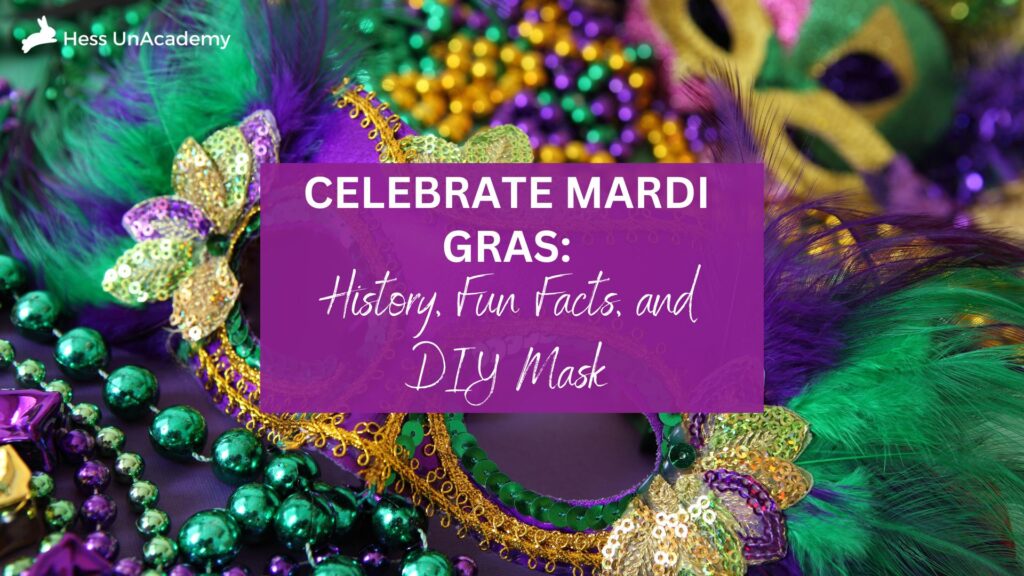
Discover the vibrant history of Mardi Gras, fun facts about this festive tradition, and a creative DIY mask activity your family will love!
Mardi Gras is one of the most colorful and exciting celebrations in the world. Known for its dazzling parades, vibrant costumes, and delicious King Cakes, it’s a holiday that brings people together for joy, creativity, and community. But Mardi Gras isn’t just about beads and parties—it’s steeped in rich history, cultural traditions, and meaningful symbols.


As homeschoolers, Mardi Gras offers a unique opportunity to explore world history, geography, and the art of celebration. In this article, we’ll uncover the origins of Mardi Gras, share some fascinating facts, and teach you how to create a festive Mardi Gras mask. It’s the perfect blend of education and fun for your family!
Easy Navigation
A Brief History of Mardi Gras
Mardi Gras, or “Fat Tuesday,” marks the final day before the Christian season of Lent begins. Its origins date back thousands of years, to ancient Roman festivals like Saturnalia and Lupercalia, which celebrated fertility, spring, and abundance. These pagan traditions were later adapted into Christian practices as the Roman Empire adopted Christianity.
In the Middle Ages, European countries such as France and Italy began celebrating Mardi Gras as part of their Carnival traditions. Revelers would wear masks, hold elaborate feasts, and parade through the streets in preparation for the solemnity of Lent.
Mardi Gras came to America in the early 18th century when French explorers Pierre Le Moyne d’Iberville and Jean-Baptiste Le Moyne de Bienville arrived near what is now Louisiana. In 1703, the first Mardi Gras celebration in America took place in Mobile, Alabama, then part of French Louisiana.


By the 1800s, New Orleans had become the epicenter of Mardi Gras festivities. The city’s famed krewes (social organizations) began organizing parades and balls, establishing many of the traditions we know today.
In 1872, the Rex Parade Krewe introduced the signature colors of Mardi Gras:
- Purple for justice
- Green for faith
- Gold for power
These colors, along with beads, masks, and King Cake, remain central to the holiday’s identity.
Fun Facts About Mardi Gras
- It’s a Legal Holiday in Louisiana: While Mardi Gras is celebrated worldwide, it’s an official state holiday in Louisiana, where schools and businesses often close for the festivities.
- King Cake Tradition: King Cake, a sweet pastry decorated in Mardi Gras colors, contains a hidden plastic baby. Whoever finds the baby is crowned “king” or “queen” for the day and is often tasked with providing the next King Cake!
- Masks Have a Special Purpose: Mardi Gras masks were originally worn to allow people of all classes to celebrate together anonymously. They remain a key tradition, with some krewes requiring float riders to wear them.
- Not Just New Orleans: While New Orleans hosts the most famous Mardi Gras celebration, cities like Mobile, Alabama, and St. Louis, Missouri, also have long-standing Mardi Gras traditions.
- The World’s Largest Free Party: Mardi Gras in New Orleans is often called the “greatest free show on Earth,” with parades and events open to all.
- Beads as Throws: The tradition of throwing beads started in the 1920s. Today, krewes throw everything from doubloons (special coins) to stuffed animals and decorated coconuts.
A Brief History of Mardi Gras
DIY Mardi Gras Mask Craft
One of the most iconic symbols of Mardi Gras is the decorative mask. Masks have been worn during Mardi Gras celebrations for centuries, adding an air of mystery and excitement to the festivities. In this fun activity, your kids can create their own Mardi Gras masks using traditional colors and decorations.
Materials Needed:
- Mask template or plain paper/plastic mask base (available at craft stores)
- Purple, green, and gold paint or markers
- Feathers in assorted colors
- Glitter, sequins, and beads
- Craft glue or hot glue gun (with adult supervision)
- Scissors
- Elastic string or ribbon
- Optional: Stickers, rhinestones, or additional embellishments
Step-by-Step Instructions:
- Prepare the Mask Base:
If you’re using cardstock, print out a mask template and cut it out. Punch holes on either side for elastic or ribbon. If using a pre-made mask base, make sure it’s clean and ready to decorate. - Paint the Mask:
Use purple, green, and gold paint or markers to color the mask. Let the paint dry completely before moving on to the next step. - Add Glitter and Embellishments:
Apply glue to areas of the mask where you’d like to add glitter or sequins. Sprinkle glitter liberally, then shake off the excess. - Attach Feathers:
Glue feathers to the sides or top of the mask for added flair. Use different lengths and colors to create a bold, festive look. - Decorate with Beads and Rhinestones:
Add beads, rhinestones, or other embellishments for extra sparkle. Arrange them in patterns or clusters for a professional look. - Attach the String or Ribbon:
Thread elastic string or ribbon through the holes on the sides of the mask. Tie it securely so the mask fits comfortably. - Show Off Your Mask:
Once the mask is dry, wear it proudly! Use it for pretend play, a homeschool parade, or as a festive decoration.
Conclusion
Mardi Gras is more than just a party—it’s a celebration of history, culture, and creativity. By learning about the origins and traditions of Mardi Gras, your homeschoolers can deepen their appreciation for this festive season. And with the DIY mask craft, they’ll have a blast creating their own piece of Mardi Gras magic.


Celebrate Mardi Gras at home by combining education and fun. What will your kids design for their masks? Share your creations in the comments below and let the good times roll!
- Love Languages in Learning: How Children Receive Encouragement Differently - February 2, 2026
- Valentine’s Day Ideas for Homeschoolers - January 25, 2026
- Parent Self-Care & Homeschooling: Why It Matters and 5 Simple Strategies - January 12, 2026
