


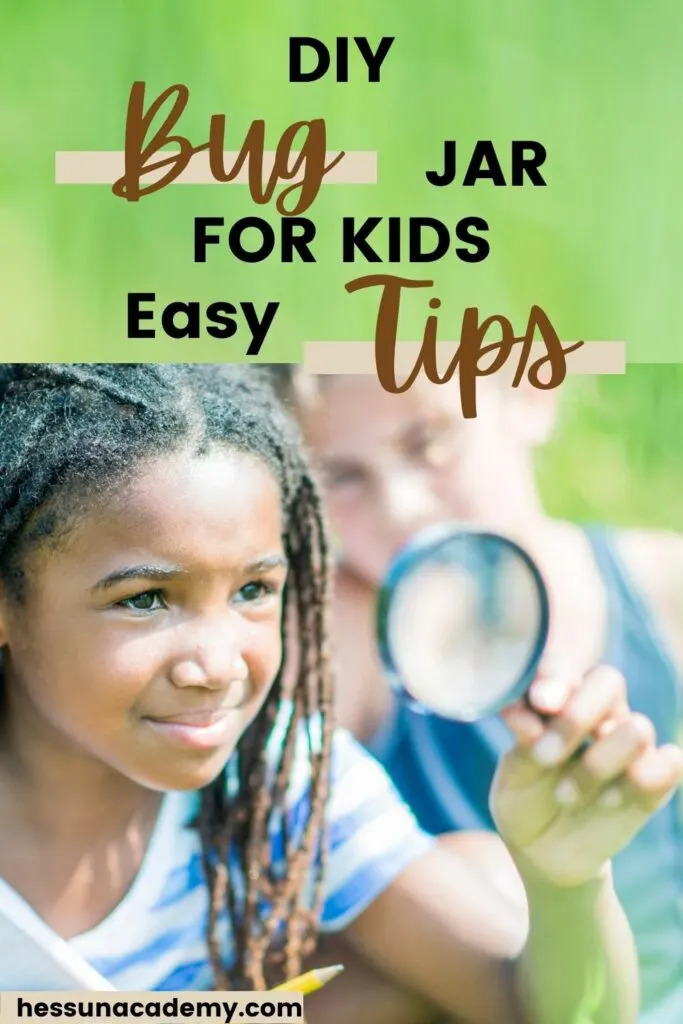
Have you ever made a DIY bug jar for kids? What better way to open the doors to science, biology, and nature studies of all kinds than looking for bugs with kids? This activity would go great with a backyard bug identification lesson or any Summertime STEM activity.
Whether you are raising toddlers, preschoolers, or older children, kids are often fascinated by bugs, the way they move, their sudden appearances and disappearances, their bright colors, funny legs, and fancy wings!


Will your kids catch a grasshopper or a ladybug?
Maybe they’ll catch an ant or a caterpillar. Lightning bug jars are also very popular.
The possibilities are endless!
This article may contain affiliate links. Please see our disclosure policy for more details.


Easy Navigation
Benefits Of Having A Bug Jar
A bug jar is a great way to teach kids about science and responsibility.
By collecting bugs in a jar, kids can learn about bug identification and bug safety. They can also learn about the bug’s environment and how to take care of it.


Additionally, kids can learn about the bug’s life cycle and diet. By caring for a bug in a jar, kids can learn the importance of taking care of their environment and living things. They can learn the importance of treating bugs with care and responsibility.
Ultimately, a bug jar is a great tool for teaching kids about science and responsibility.
What do you think are the benefits of having a bug jar? Let us know in the comments below!


Inspire, Create, Discover: Expertly Curated STEM Projects!


STEM Made Easy Digital Subscription
Get 20% off – up to 2 months FREE!
💡Spark creativity! Get 5 curated hands-on STEM project blueprints each month
😅Stress-free, no planning required. Just gather materials and get started
📚Supplemental worksheets, games, and materials to reinforce STEM learning

Ways To Tie A Bug Jar Into Summer Learning (Or Anytime!)
There are so many ways to incorporate a bug jar into your summertime learning (or anytime!)
A bug jar is a great way to tie summer learning into any unit studies or gardening you might be doing with your kids!


Here are a few ideas of how to use bug jars in your studies:
For unit studies, bugs can be used to teach about the life cycle, diet, and habitats of different animals.


Kids can observe their bug and then research what kind of bug it is and make notes in their bug journal. They can also track the bug’s movements over time to see how far it traveled.
You can incorporate the search for insects into gardening time or trips to the park. Try a Monarch Butterfly Study for example, or enjoy some educational bee activities.
Use a bug jar in conjunction with a unit study on Wildlife in the Gardens. Or make it an activity all its own.
From bug scavenger hunts to keeping them in jars made into temporary habitats, there are lots of ways to enjoy observing insects and arachnids.
Gardening
Gardening is another great way to use bug jars! Kids can use them to catch and release helpful bugs like ladybugs who will eat pests in your garden, or pollinating bees who will help your flowers grow.



They can also use bug jars to study which kind of bugs are attracted to which kinds of plants. Grab some free garden worksheets and get started learning about bugs in the garden!
Simple Science
Bug jars can also be used for simple science experiments or STEM activities.
Try putting different colored liquids in different jars and see if the bugs are attracted to certain colors more than others. You could also put different types of food in each jar and see what kinds of bugs are attracted to each type of food.

The possibilities are endless! So get out there and start exploring the world of bugs with your kids!
Writing
Practice writing, critical thinking, observation, and reflection by starting a bug observation journal. In this journal, kids can write down everything they observe about their bug.
They can make sketches, take pictures, and write down their thoughts and observations. This is a great way to encourage kids to really think about what they’re seeing and to reflect on their own learning.
Bug Identification
Once you’ve caught your bugs, you want to be able to identify them! So how does one learn about bug identification with kids?
Anyone who’s gone on a nature hike or even just taken a walk around the block knows that there are an incredible variety of bugs to be found.
For bug enthusiasts, being able to identify different types of bugs is essential for understanding the complex ecosystem that we live in.
While there are many ways to learn about bug identification, one of the simplest is to use a bug identification app. These apps use photographs and concise descriptions to help users identify different types of bugs.


Whether you’re trying to identify a bug you found in your backyard or you’re looking to expand your knowledge of the natural world, a bug identification app is a great resource.
There are lots of apps you can download for free and use to help you with bug identification. Google Lens is our personal favorite but feel free to search around for some other options!
There are also likely some great Facebook groups in your area that specialize in identifying bugs.
Where To Buy A Bug Jar
There are plenty of places to buy a bug jar. Local sporting goods stores such as Bass Pro and Cabellas often have some, as do book stores or even just Wal Mart.
Or feel free to order some bug jars in from Amazon. They have plenty of styles to choose from so you will get exactly what you want.
In addition to bug jars, you can also purchase kits that are for observing specific bugs such as an ant farm or a butterfly/caterpillar house.


Whatever option you choose to go with, your kids are sure to have a ton of fun (and make a bunch of memories) observing their bugs.
Preparing Your Bug Jar
If you don’t wat to buy a dedicated bug jar, almost any kind of clear jar with a wide-mouthed opening will work for a bug jar. You can use a glass jar if your kids are careful or you can use a plastic jar.
If you plan on keeping the bugs you collect for more than a few minutes, bigger (like a gallon-size pickle jar), is better. Recycled mason jars work just fine for the short term.
Or if you prefer, there are tons of great bug jars for sale on Amazon that work really well. Feel free to check out those options!


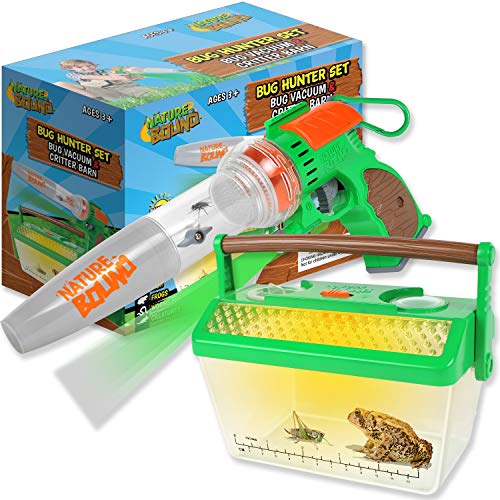
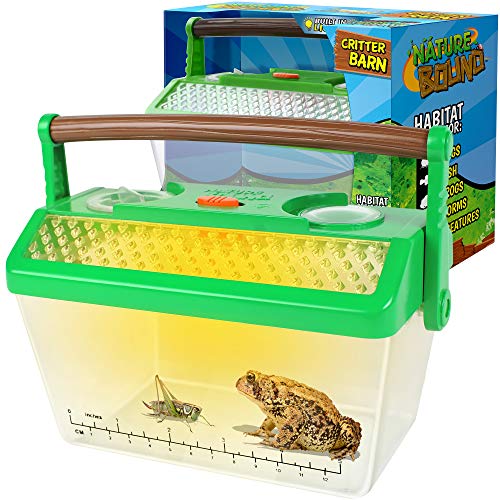
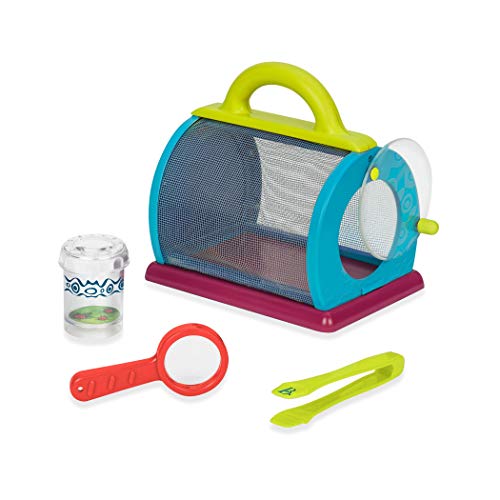
Wash your chosen vessel and warm water and detergent and rinse it thoroughly several times to make sure there is no trace of soap left.
If you are using a jar with a ring lid you can either poke holes in the flat part of the lid of the jar, or replace it with a cloth or waxed paper, or a screen. If using a cloth or waxed paper, make sure to still poke air holes in it, a toothpick can work well for this.
If using an old window screen, trace circles on the screen using either the ring or the flat lid as a guide. Absolutely wear eye protection while cutting the circles of the screen out with tin snips or old scissors! Tiny bits of metal can go flying when doing this task. Wear gloves when pressing the circles of the screen into the ring.
Add bits of the bug’s natural environment to the jar, such as grass, twigs, and leaves.
Free Paper Bug Jar Printable (DIY Bug Jar Craft)
If you can’t keep real bugs in a real jar for whatever reason, maybe your kids will get a kick out of drawing and designing their own paper bug jar. DIY bug jar crafts are a great way to enjoy bug jars and bug identification without having to collect real live bugs.
I’ve got a free printable paper bug jar activity for kids that you can download and print out. Have your kids decorate the bug jar with the bug or bugs of their choice and then fill it with drawings of habitat and food items that bugs will enjoy.
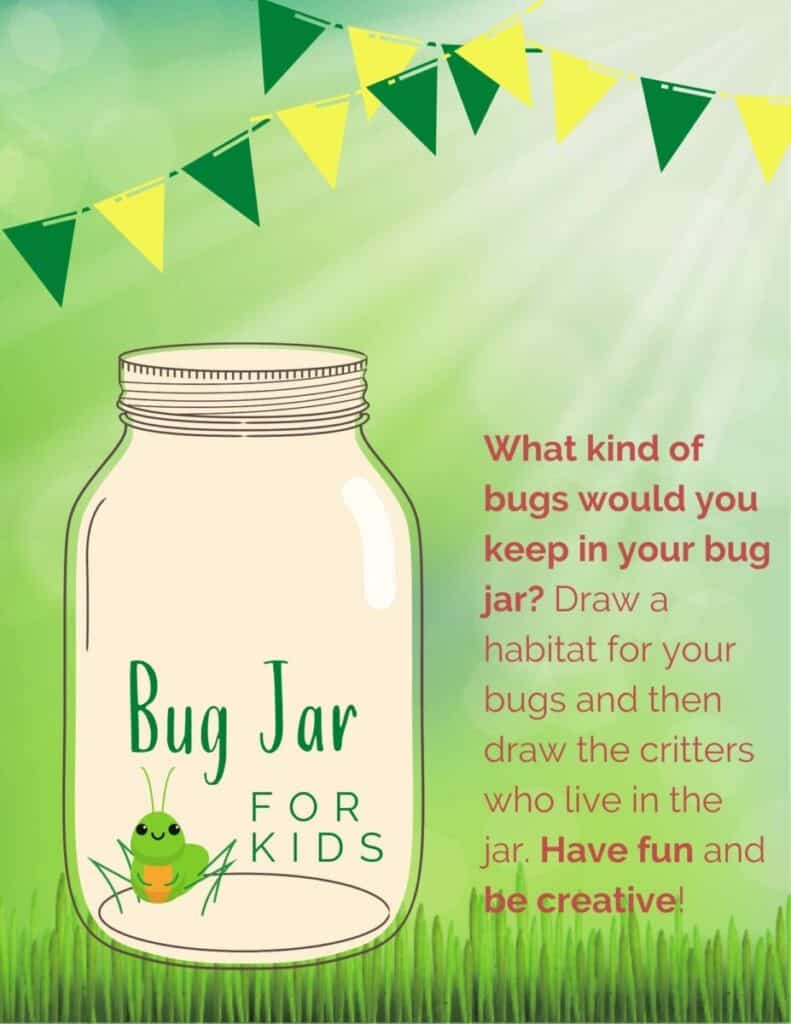

Older kids can turn this into an educational activity by researching what habitat and food certain bugs enjoy and making sure to include pictures of those specific items.
This kids’ craft is a very fun learning activity to accompany any kid-friendly gardening project or just for kids who want a bug jar but can’t have their very own bug that’s actually alive.
Grab your free paper bug jar activity now!
Use this free printable bug jar activity in conjunction with these other free printable gardening worksheets.
Teach Kids to Be Naturalists
Temporarily keeping bugs gives your child the opportunity to carefully observe them, starting with the environment in which the bug is found.
When you’re out looking for bugs to collect carefully observe your surroundings. Have your little bug catcher bring notebooks or note cards and take notes about the habitat you find your bugs in. What is the temperature? Is it shady or sunny? What plants and other animals are nearby?
These observations can tell you a lot about how to keep your bugs alive while you are studying them. They are an important thing to do before you catch bugs of any kind if you plan to keep them alive.
Start looking for your bugs!


Flowers are an excellent place to look, they house many different types of bugs, from beetles to true bugs to bees and wasps to spiders and more. Search leaves and twigs of bushes and trees. Gently turn over stones or logs to see what’s underneath (centipedes, millipedes, scorpions, earthworms, and pill bugs to name a few!).
Make sure to take plenty of notes and even draw pictures of what you find!
When collecting bugs be sure to identify them as you go. Use tweezers or a spoon to pick up bugs you aren’t sure of. Don’t collect anything endangered!
Use a magnifying glass to get a closer look at your bugs once you’ve caught them. Kids love bugs and this is an easy way to get an even closer look at them.
Make sure to carefully note the bug’s habitat so you can return them to the same or similar location when you are done enjoying them. And have fun!
Related Posts:
Gardening STEM Projects
Summertime STEM Activities
Free Gardening Worksheets
- Free Printable Valentine Multiplication Worksheets - June 4, 2025
- Free Printable Martin Luther King, Jr. Word Scramble - June 4, 2025
- Digital Math Curriculum | Pros, Cons, and Options - June 4, 2025
Laurie
Friday 22nd of July 2022
Great idea! Wish mine were still small so they could make one! Thanks for sharing this at the Homestead Blog Hop 401
Laurie Ridge Haven Homestead