


Can you tame a dragon with magic? Well, we’ll find out together today as we learn about static electricity and tame some dragons using science (rather than magic – although it will seem like magic).
This is a fun activity for kids who are looking for something educational yet engaging. Plus what young dragon lover wouldn’t want to enjoy a dragon STEM activity? So let’s get started on this fun static electricity experiment!!


This article may contain affiliate links. Please see our disclosure policy for more details.


Easy Navigation
What is Static Electricity?
Static electricity is an electric charge that does not flow.
We can make charges “static” by rubbing certain materials together, such as a balloon on your head or a comb through your hair. If we move around electrons from one material to another, we have made an electric current.
However, if we rub two materials together and place one of them on our head, we instead transfer electrons from the object to ourselves.


Static electricity is invisible and cannot be felt until it discharges itself. For example, when an electric light switch is flipped or you touch a metallic object after rubbing your feet around on the carpet, your body becomes electrically charged and then discharges into whatever you touch.
This shock that you may feel is the electricity leaving your body and creating a spark that lights up a light bulb or blows out an electronic circuit.
What should we do with this knowledge? We should find ways to use it! First, let’s tame some dragons, shall we?
Static Electricity Science Experiment for Kids – Tame a Dragon Tutorial
For this STEAM activity, students will learn about positively and negatively charged electrons while experimenting with static electricity. Students will give their balloons a negative charge by rubbing the balloon on their heads. They will then see what happens to the plastic dragon after the balloon has received all these negatively charged electrons.
Students will test their plastic dragon both before and after giving it a negative charge. They will then get to explore what happens when you put two negatively charged items close to one other.


After taming their plastic dragons, students will explore and discuss other ways static electricity and charged electrons affect us in our everyday life.
Materials Needed
- Balloons (we used a cheap package of latex balloons)
- Plastic bag (such as a grocery bag) Alternatively, you could also use tissue paper.
- Scissors


Magic (Static Electricity) Dragon Instructions
Follow these easy instructions for making your own magic (static electricity) dragons)

Initial Prep and Setup
- Blow up balloon (or a couple of balloons)
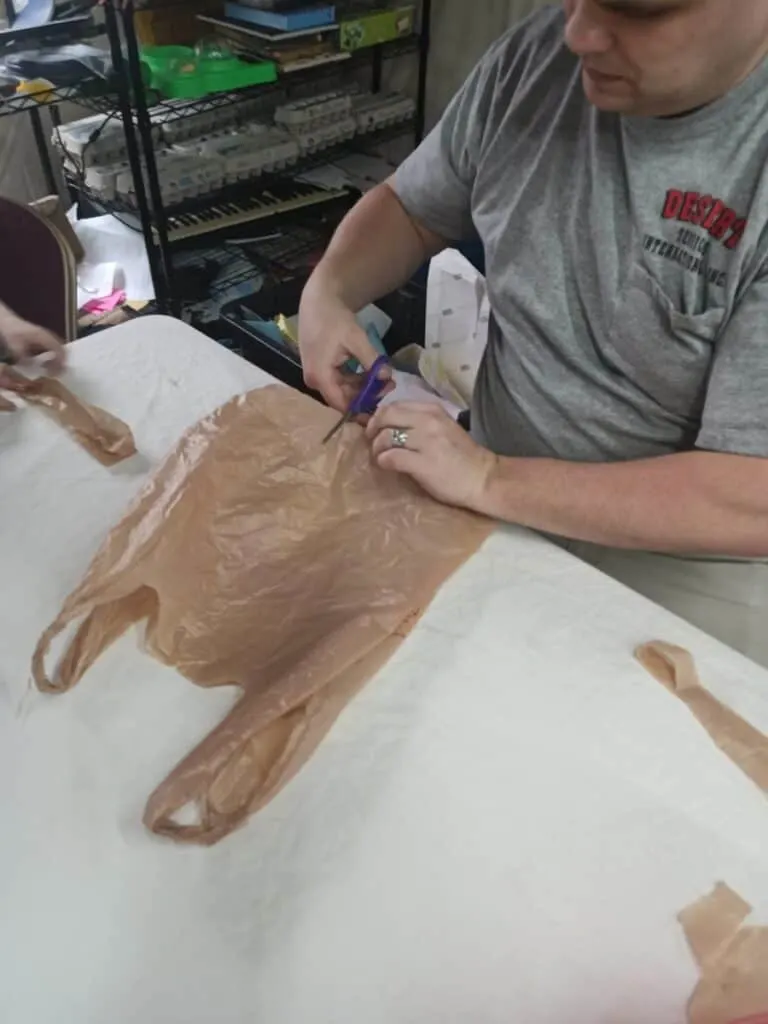
- Cut a dragon shape out of a plastic grocery bag

Project Steps
- After your balloon has been blown up, rub it quickly against somebody’s head. Try to hold your ballon with as much surface area as possible (so hold it by the tied-up knot for example). Keep rubbing until that person’s hair is standing up all over.

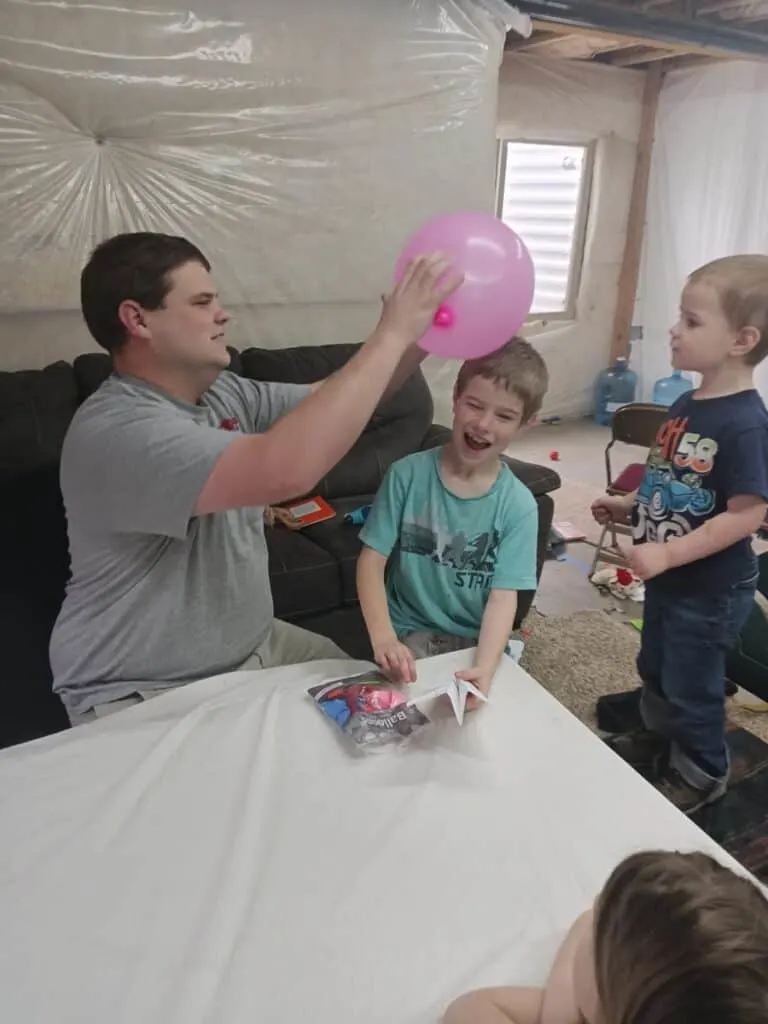
- Either keep holding the balloon by the knot or give it to somebody else to hold, being sure they touch the surface of the balloon as little as possible.
- Rub your plastic dragon on somebody’s head. Keep rubbing until the dragon is attracted to and hugs your hand and arm. Try not to let it touch your hand and arm too much, although this will be difficult.


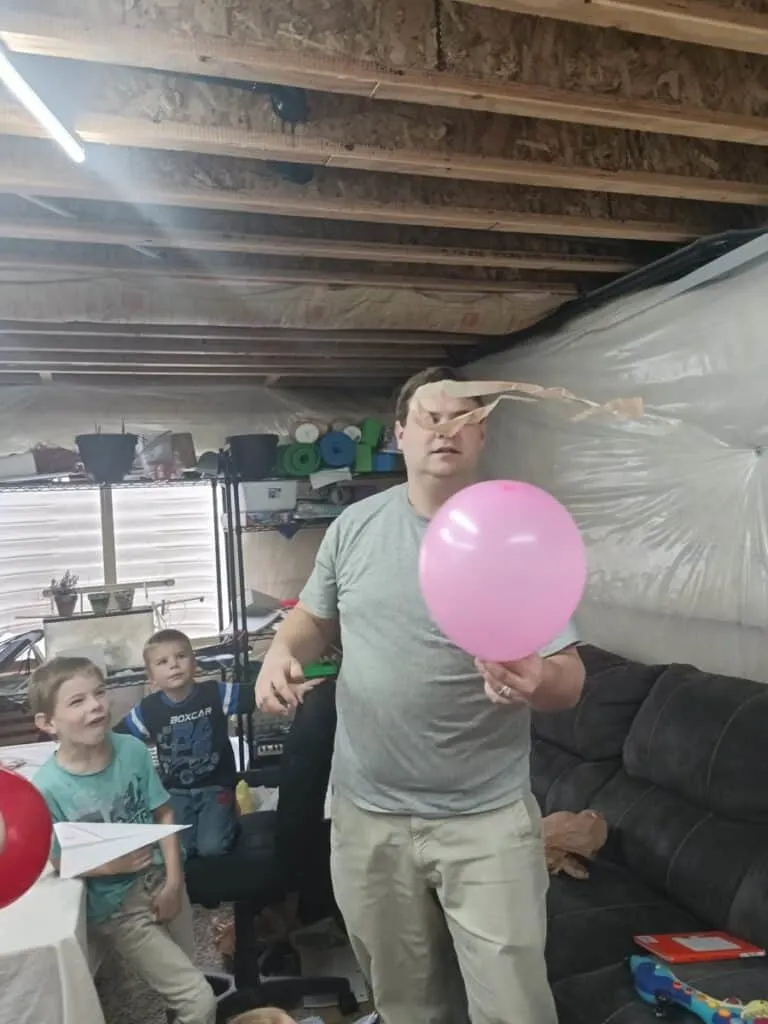
- Now for the fun part! Hold your balloon out in front of you and hold your plastic dragon above the balloon. Let your dragon go (it will cling to your hand – try to peel it off and drop it) and watch how it interacts with your balloon!
- If you did this right, both objects will be negatively charged which will result in the balloon pushing the dragon away into the air with an invisible force.

- Play with your balloon and dragon again and again! You might have to repeat steps in order to recharge one or both objects.
- When you are done experimenting with two negatively charged objects, let’s see if you can perform this experiment with oppositely charged objects (one positive charge and one negative charge equates to opposite charges).
- Rub your balloon all over someone’s head until it is sufficiently negatively charged.
- Don’t rub your plastic dragon on somebody’s head. This time, gently rub the dragon along your hand and palm. Then put your dragon on a table.
- Hold your balloon above your dragon. If the dragon is positively charged, it will be attracted to your balloon. See if you can tame your dragon and get it to dance!
Turning This Magic, Tamed Dragon Into A STEM Project Or Science Activity (What’s Happening)
Have you ever rubbed a balloon close against your head and watched your hair stick up on end? The same thing happens when you wear a winter hat or rub a blanket against your head. But why?
Everything around us is made up of teeny tiny, microscopic particles called atoms. Atoms are the smallest unit of ordinary matter. Atoms contain or are surrounded by electrons and each electron carries either a positive, a negative, or a neutral charge.
Have you ever stuck a magnet to a refrigerator? This is an example of a magnetic attraction that is similar to the attraction of charged electrons. Just like the magnet sticks to the refrigerator, positively charged electrons are attracted to negatively charged electrons.
Have you ever tried to force two magnets together and instead of sticking they push against each other or repel each other? This is what happens when two positively charged or two negatively charged particles are put next to each other.
While opposites attract, similarly charged items will repel or run away from each other.


Static electricity, or a static charge, is the buildup of an electrical charge within a particular object. When two objects are quickly rubbed together, electrons are transferred from one object to the other resulting in an object with a new charge.
Your balloon has been negatively charged and your hair stands up on end and follows the balloon because all that is left there are positive electrons, which are attracted to your now negatively charged balloon.
Objects with a buildup of static electricity must be discharged in order to return to their previously charged state. This is done by grounding the object or providing the static electricity with a path to travel. In the case of the balloon, rubbing your hand on the balloon or touching it to a light switch or electrical socket will ground the balloon.
We witness this same phenomenon in nature via lightning strikes. Lightning strikes are merely a buildup and a release of a whole lot of static electricity.
Follow-Up Questions and Activities
After completing this activity, ask your kids the following questions. Encourage critical thinking and an in-depth discussion.
- Besides lightning and magnets, what other objects do we interact within our lives that are positively or negatively charged?
- How can you tell if a magnet is positively or negatively charged? Why do you think some magnets have the same charge on both sides and others have different charges?
- Did you know that batteries have a positive and a negative side? What happens if batteries are put into place incorrectly, or backwards?
- Can you tell the charge of an object just by looking at it? What about just by touching it?
- How can you determine the charge of an object?
After discussing the questions above, consider enjoying one of these follow-up activities or science projects with your kids.
How Does Static Electricity React With Other Objects?

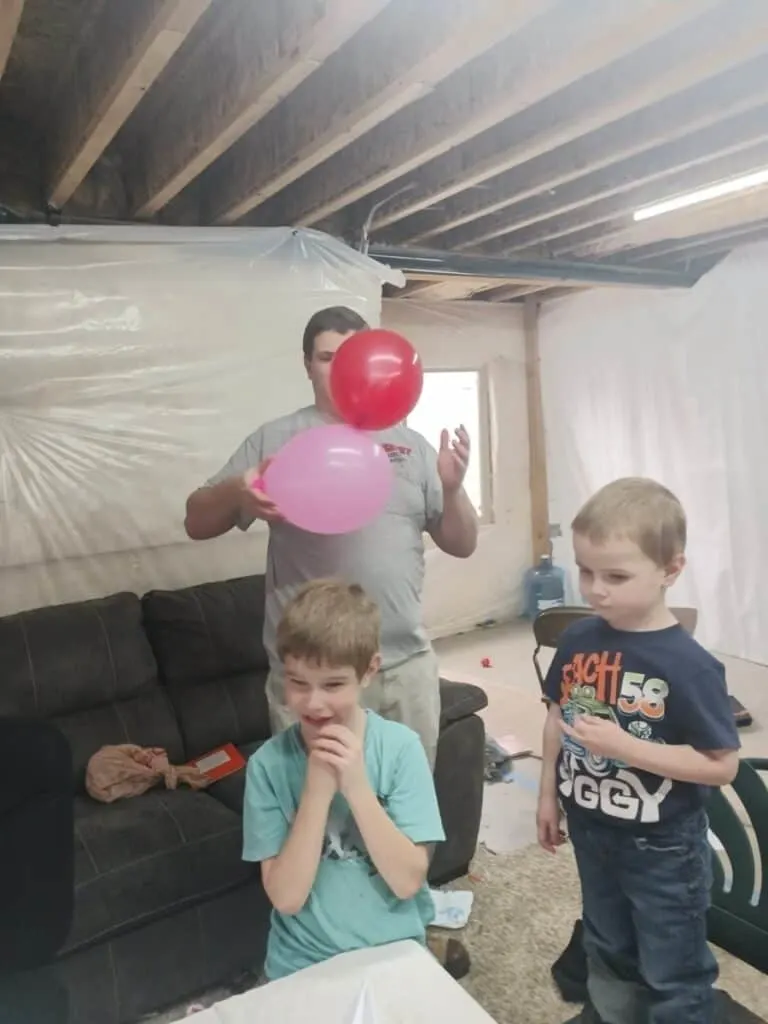
What other objects can you charge and tame? Experiment with multiple balloons working off of each other, a dragon made of paper, or something else entirely!
Some items to try:
- Empty tin can
- Rod or stick
- Styrofoam plates
- String
- Pieces of fabric
- Etc
Using the same concept, see if you can make a balloon stick to a wall! This is another fun way to experiment with static charges.
Separating Salt and Pepper Particles
Can you separate salt and pepper particles that have already been mixed?
- Mix 1 tsp of salt and 1 tsp of pepper together
- Rub a plastic spoon against a piece of cloth for a few (40) seconds
- Hold your spoon over the mixture. Do some particles react and jump against the spoon? Which ones? Why do you think this is?
Static Electricity Projects and Activity for Older Students (Middle School and High School Teens)
Do you have teenagers at home? These science projects would be a fun way for older students (middle school and high school) to take these static electricity lessons even further.
- Can you bend water with the power of electricity? Research water bending and see if you can perform this experiment. Now you’re a real-life water bender!
- Have a lesson on atoms, electrons, neutrons, protons, and ions. This activity would go hand in hand with a lesson on atoms.
- If you go to https://hessunacademy.com/go/geniusgames you will find some awesome science and chemistry games that revolve around ions and atoms. Buy one of those games to play with your teens. Recommended for ages 14+.
Tips and Tricks To Make This Static Electricity Experiment Go Even Better!
- Make sure you make a big plastic dragon. The small one kept getting discharged by our hands before we could get it to react to the balloon.
- Make your balloon as big as possible without popping it. Bigger balloons worked much better than smaller ones.
- Your negatively charged dragon will move around very quickly so make sure you are in a large, cleared space so you don’t trip on anything or run into anything while taming your dragon.
Science and Art
This static electricity experiment is part of a celebration combining science and art being hosted by Teach Beside Me. Teach Beside Me has many more fun experiments that combine science and art. Go check them out and have even more fun with your kids! (Series goes live starting the week of December 6th.)
Or to bring science and art into your everyday adventures, buy Karyn Tripp’s brand new science and art book, “Science Art and Drawing Games For Kids” on Amazon. This book would make an amazing Christmas gift idea for any homeschooling child or family!


More STEM Resources for Kids (Including A Free Printable)
If you liked this activity, you are going to love the STEM Made Easy Digital Subscription. Each month, you receive a project pack that includes 5 fully planned STEM project guides along with worksheets and instructions for how to make them fun and engaging for kids ages 3-19.


Want a free project sample? Sign up to get a complete 39-page project guide sent to you so you can see exactly what’s inside each of the STEM Made Easy Digital Subscription project pack.
I’ve also got this ultimate list of STEAM and STEM activities for kids of all ages if you want to take a look.
More Dragon STEM and Science Experiments
Speaking of dragons, be sure to check out these other fun dragon STEM activities for kids!
Or try more general STEM projects with year-round themes and topics.
- Free Printable Valentine Multiplication Worksheets - June 4, 2025
- Free Printable Martin Luther King, Jr. Word Scramble - June 4, 2025
- Digital Math Curriculum | Pros, Cons, and Options - June 4, 2025