


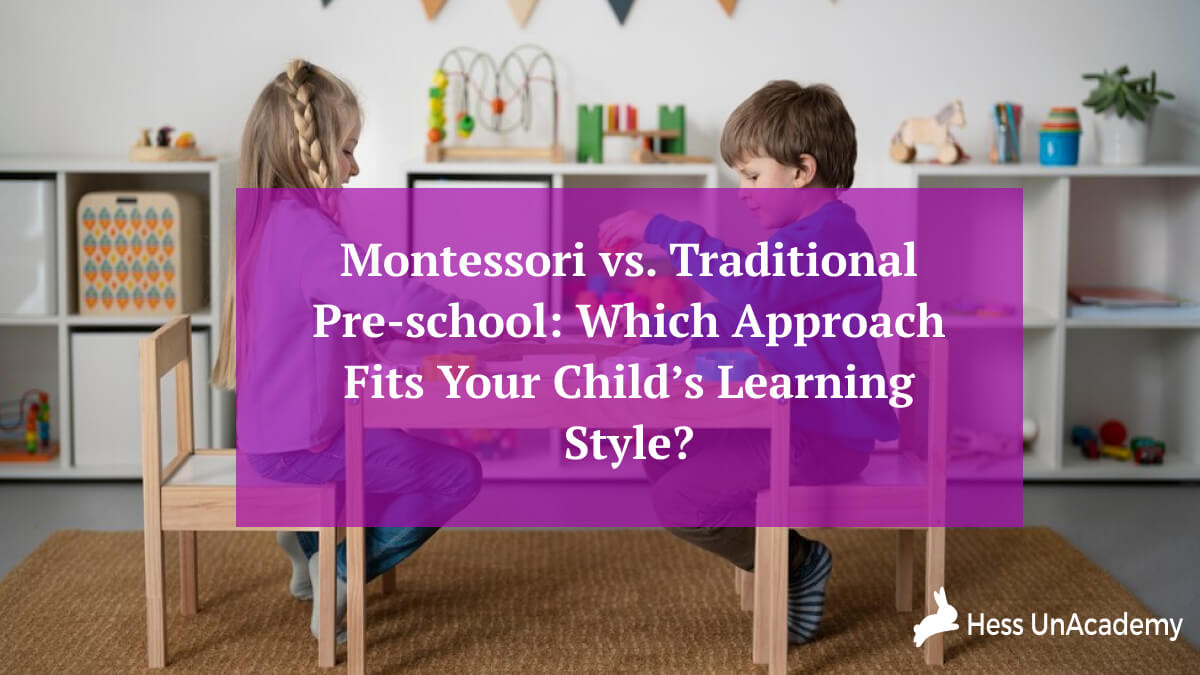
For parents, guardians, and educators striving to give young learners the best educational start, choosing between Montessori and traditional pre‑school approaches can feel overwhelming. Both systems offer unique philosophies and practices aiming to nurture early development while building crucial life skills. As you weigh these options, let’s explore the key differences, benefits, and challenges of each method so that you can confidently select a learning environment that both resonates with your child’s personality and supports their academic growth.
Easy Navigation
Understanding Montessori Education
Historical Context and Foundations
The Montessori method originated over a century ago when Dr. Maria Montessori, an Italian physician and educator, observed how children naturally learn from their environment. She developed an approach emphasizing self‐directed activity, hands‑on learning, and collaborative play. Montessori classrooms are designed to stimulate exploration and allow children to develop at their own pace, a concept that resonates with numerous modern educational theories emphasizing individualized learning. This method encourages curiosity and creativity whilst nurturing independence, which has resonated with parents worldwide.


Philosophical Foundations and Learning Principles
Montessori education is built on the belief that children are naturally curious and possess an intrinsic desire to learn. In these classrooms, the teacher acts more as an observer or guide rather than a conventional instructor. Learning materials are carefully curated to spark interest and involvement, and every activity is chosen to help children master practical skills. The emphasis on self-paced discovery provides each student the opportunity to progress based on their personal readiness, leading to a learning experience that respects and addresses individual developmental needs.
Classroom Environment and Materials
Montessori classrooms are characterized by an orderly and aesthetically pleasing environment, where every learning material has a specific place and purpose. These spaces are designed to encourage independence; for example, furniture is child‑sized, and every item is accessible. The environment itself becomes a teacher, guiding children toward thoughtful engagement and discovery. Materials like colorful beads for math or tactile language puzzles engage multiple senses and make the abstract concrete. This thoughtful design not only builds concentration and self-discipline but also fosters a deep respect for one’s learning space.
The Role of the Teacher in a Montessori Setting
In Montessori education, teachers play the role of facilitators rather than traditional instructors. They observe each child’s interests and skill levels and introduce materials that spark further exploration. Maintaining a delicate balance, they step back to let children take charge of their learning journey, offering guidance when necessary. This observational role ensures that individual progress is respected and nurtured. Teachers often work one-on-one or in small groups, allowing for personalized instruction and carefully monitored progress. This subtle yet purposeful approach often leads to increased self-motivation and a greater sense of personal responsibility as children learn by doing.
Exploring Traditional Pre‑school Education
Structured Curriculum and Daily Routines
Traditional pre‑school settings typically feature a more structured curriculum designed around a standardized set of learning outcomes. This approach includes scheduled periods for varied activities like circle time, art, music, and outdoor play. The structure in traditional preschool programs aims to introduce young children to the routines of formal education. It reinforces time-bound activities and group instructions that can be essential in preparing children for the more regimented schedules they will encounter in higher grades. With clear transitions and established routines, this structure can provide a sense of security and predictability, which many young learners find comforting.
Teacher‑Led Instruction and Group Engagement
In the traditional approach, teachers assume a central role in delivering structured lessons focused on a specific curriculum. These lessons are often planned around core academic subjects such as literacy and numeracy. Classroom activities are carefully orchestrated to ensure that every child is exposed to the same content simultaneously, which can enhance social learning and coordination. The teacher’s active involvement in directing classroom activities fosters a controlled learning environment, ensuring that the pace remains consistent for the entire group. This method emphasizes collective progress and often utilizes group activities to build social skills and teamwork.
Focus on Socialization and Early Development
Social interaction is a primary focus within traditional pre‑school environments. Through planned group activities and teacher-led discussions, children learn how to share, communicate, and collaborate with peers. This structured socialization is designed to ease the transition from the home environment to a more formal school setting. Classrooms under this approach often incorporate play-based learning sessions where instruction occurs in a playful manner, fostering a gradual transition from learning through play to more formal educational processes. The impact on communication, empathy, and teamwork skills is tangible and sets a supportive foundation for future group interactions.
Comparing Montessori and Traditional Pre‑school Approaches
Differences in Classroom Structure and Learning Environment
While Montessori classrooms are tailored to be open-ended and adventurous, encouraging self-paced exploration, traditional pre‑schools lean on structured environments and scheduled activities. In Montessori settings, the classroom is often arranged to permit freedom of movement and independent choice, fostering an atmosphere of responsibility and self-discovery. In contrast, traditional classrooms provide a framework that emphasizes group instruction and adherence to a fixed schedule. Parents should consider whether their child thrives in an environment where they’re free to choose their activities versus one where a set routine is maintained. This core difference plays a pivotal role in early childhood learning and development.
Assessment and Evaluation Strategies
Assessment in Montessori education is fundamentally different from traditional systems. Instead of formal grading or standardized testing, Montessori educators gauge progress through careful observation and individualized records. This qualitative approach focuses on holistic development rather than merely academic achievement. On the other hand, traditional pre‑schools often track progress through periodic assessments, using both formative and summative evaluations to ensure children meet set milestones. Parents who value a more natural progression of learning might lean toward Montessori, whereas those who prefer measurable academic benchmarks might favor the traditional approach. Understanding these contrasting methods is crucial for selecting an educational path that matches your child’s unique needs.
Encouraging Creativity, Independence, and Discipline
Both Montessori and traditional pre‑school systems aim to encourage creativity and discipline, though they do so in different ways. Montessori education nurtures an environment where exploration leads to natural discipline, with routines that evolve alongside the child. Creativity is stimulated by a child’s inherent freedom to explore a rich variety of materials. In contrast, while traditional pre‑schools also promote creativity through arts and crafts or imaginative play, discipline is often enforced through clear rules and direct teacher oversight. The structure of a traditional classroom might offer more immediate behavioral guidelines, which some children may need initially to feel secure. Each approach has its demonstrable strengths and potential drawbacks when adapting to different learning styles.


Real‐World Examples and Success Stories
Case Study: Montessori Magic in Action
Consider the example of a young child named Emma, who initially struggled with the rigid, one-size‑fits‑all teaching methods in some early learning settings. Enrolling in a Montessori program allowed her intrinsic curiosity to flourish. Emma was encouraged to select tasks that engaged her interests, whether it was building with blocks or experimenting with language puzzles. Over time, her confidence grew, and she began to demonstrate remarkable problem‑solving skills alongside improved social interactions. Teachers reported that Emma not only excelled academically but also developed a strong sense of independence and self‑respect. Her experience illustrates how the Montessori method can nurture a love for learning in children with diverse interests.
Case Study: Traditional Triumph and Social Cohesion
In another real‑world example, a child named Jacob attended a highly rated traditional pre‑school where structured lessons and group activities were the norms. Jacob began as a quiet participant; however, the consistent routines and structured play gradually helped him build social skills. Through interactive circle times and collaborative projects, Jacob cultivated excellent communication abilities and a sense of community with his peers. His teachers highlighted that the regimen of regular assessments helped monitor his developmental progress and allowed for timely interventions. Jacob’s journey shows that a traditional pre‑school setting can be especially beneficial for children who benefit from a more predictable environment and thrive in group settings.

Evaluating Your Child’s Learning Style and Needs
Identifying Your Child’s Personality Traits
Deciding which educational approach best suits your child begins with understanding their intrinsic personality traits. Whether your child is naturally inquisitive, prefers independent exploration, or enjoys structured group play, these characteristics can heavily influence how they respond to different teaching methods. Engage in observation over time: Does your child eagerly select new challenges on their own, or do they seek guidance when uncertain? Open discussions with current educators and reviewing your child’s past experiences can offer valuable insights. Recognizing these traits empowers you to choose a program, either Montessori or traditional pre‑school, that is tailored to foster your child’s personal growth and academic development.
Considering Family Values and Educational Goals
Family values play an important role in determining the best educational fit for your child. Many parents value the flexibility and child‑centered nature of Montessori education, which aligns with a home‑like learning atmosphere. Conversely, some families prefer the societal norms and measurable outcomes provided by traditional pre‑school settings. Reflect on your long-term educational goals: Do you envision your child developing profound independence and prioritizing problem-solving, or are you more focused on ensuring structured social engagement and academic discipline from an early age? Balancing these values with practical aspects such as location, teacher expertise, and program reputation further aids in making an informed decision that complements your overall family philosophy.
Logistical Considerations: Location, Cost, and Flexibility
Beyond pedagogical preferences, practical considerations are equally essential. Montessori programs, known for their distinct educational philosophy, may sometimes command a higher fee structure and require specific teacher qualifications. Meanwhile, traditional pre‑school institutions might offer a broader range of scheduling options to fit family routines and work schedules. It can also be helpful to visit prospective schools, participate in orientation sessions, and talk directly with administrators and current parents. By weighing factors such as transportation, program flexibility, teacher-to-child ratios, and consistent feedback loops, you can identify which educational setting aligns with both your child’s needs and your family’s logistical preferences.
Integrating Pedagogical Insights into Your Decision-Making
Balancing Structured Learning with Creative Freedom
Modern pedagogical research continually highlights that a blend of structure and creative freedom is optimal for young learners. While Montessori education provides the freedom necessary for creative exploration, traditional pre‑school environments instill a sense of convention that can prepare children for formal schooling. Both educational paradigms bring valuable assets to the learning process. Reflect on your child’s previous experiences, perhaps in informal play, community classes, or library activities, to discern how they respond to various levels of guidance. An ideal strategy might involve trial experiences in both settings, assessing how your child adapts to each environment and identifying which method bolsters both their academic and social-emotional development.
Encouraging a Love for Lifelong Learning
At the heart of both educational systems is the aspiration to instill a love for lifelong learning. Montessori classrooms nurture this passion by allowing natural curiosity to dictate the pace and content of learning sessions, while traditional pre‑schools introduce young minds to structured inquiry and critical thinking exercises. Both approaches emphasize the importance of knowledge as a tool for empowerment and growth. For parents, the ultimate measure of success is whether your child develops confidence, intrinsic motivation, and a robust set of social skills that pave the way for future academic achievements. By understanding the nuanced dynamics of both methods, you can help guide your child towards becoming an ardent and engaged lifelong learner.


Practical Take‑aways and Actionable Tips
Deciding on the Best Approach for Your Child
After examining the distinct differences between Montessori and traditional pre‑school methods, consider these practical take‑aways to guide your decision:
Observe and Reflect: Spend time understanding your child’s interests, temperament, and learning habits. Consider informal activities and past educational experiences to gauge what sparks their curiosity.
Visit Potential Schools: Schedule visits to both Montessori and traditional pre‑school settings. Observe classroom dynamics, teacher-child interactions, and overall environment. Ask questions about curriculum flexibility, assessment methods, and teacher training.
Engage with Educators: Talk to teachers and administrators about their educational philosophies. Understand how they tailor learning experiences to different personalities and developmental needs.
Consider Your Logistics: Evaluate proximity, schedule compatibility, and tuition costs. Ensure that the program you choose not only aligns with your educational values but also fits within your family’s practical framework.
Trial Programs: When possible, consider enrolling your child in a short-term trial or part‑time program. This hands‑on experience can provide invaluable insights into which environment your child responds to best.
Monitor Progress: Regularly check in with your child about how they feel regarding their learning environment. Listen carefully for signs of stress or excitement, and be open to making adjustments as needed.
Equally important is fostering a nurturing home environment that extends beyond the classroom. Reinforce learning at home by engaging in activities that echo the educational method you choose. For instance, if your child is in a Montessori setting, encourage independent play and exploration with carefully selected toys and learning materials. If they are in a traditional setting, complement their day by establishing playful routines that reinforce academic concepts through games and conversation.
By understanding the unique merits of both Montessori and traditional pre‑school methods, you can craft an educational plan that is uniquely curated for your child’s needs. Remember that the journey to educational success is not linear; it’s an evolving process where open communication with educators, continuous reflection, and hands‑on observation are your greatest tools. As you weigh your options, consider combining insights from both systems to create a well-rounded and engaging learning experience.
To sum up, the decision between Montessori and traditional pre‑school education should be driven by a clear understanding of your child’s personality, learning style, and developmental needs. Every child is unique, and the right learning environment should feel like an extension of your family’s values and aspirations. If your child thrives in more independent, self-directed setups, the Montessori approach might be ideal; if structure and guided group learning bring out their best, then a traditional pre‑school could be the right choice.
Now is the time to take action! Enroll with Hess UnAcademy today and discover resources that empower you to support your child’s successful learning journey. Embrace these practical tips, revisit what truly resonates with your child’s natural abilities, and confidently shape a path that leads to vibrant academic and personal growth.
- Love Languages in Learning: How Children Receive Encouragement Differently - February 2, 2026
- Valentine’s Day Ideas for Homeschoolers - January 25, 2026
- Parent Self-Care & Homeschooling: Why It Matters and 5 Simple Strategies - January 12, 2026