


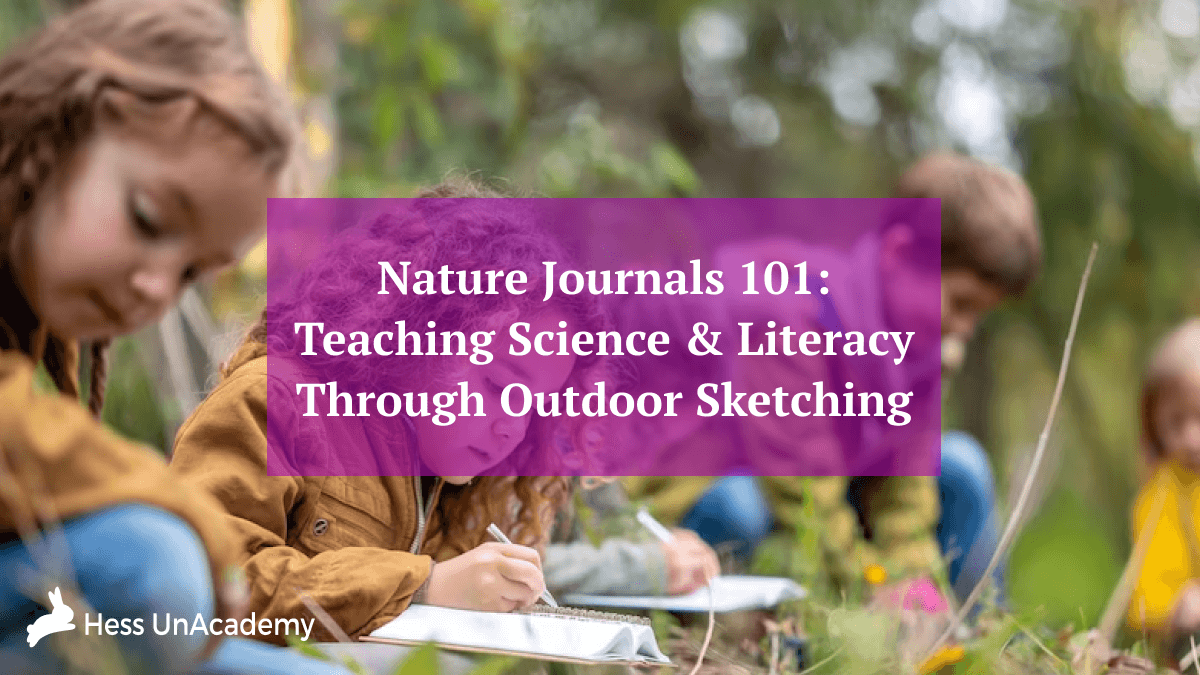
Nature Journals 101: Teaching Science & Literacy Through Outdoor Sketching offers parents, guardians, and educators an engaging, hands‑on way to blend science education with literacy. Imagine your child or student stepping outdoors to sketch, record observations, and weave stories from nature’s every detail – transforming everyday environments into dynamic classrooms. This approach not only bolsters scientific inquiry but also nurtures effective communication skills as young learners document their discoveries with creative flair.
Easy Navigation
Introduction to Nature Journals in Outdoor Learning
What Are Nature Journals?
Nature journals are more than just sketchbooks; they are interactive logs that capture observations, thoughts, and reflections about the natural world. For educators and parents alike, using these journals can be a breakthrough in facilitating inquiry‐based learning. Children record sketches of leaves, insects, weather patterns, and more, while simultaneously describing what they see, hear, and feel. Nature journals bridge the gap between artistic expression and scientific observation, providing a multilayered learning experience that encourages curiosity and a genuine passion for discovery.


The Educational Value of Outdoor Sketching
Outdoor sketching deepens engagement with science content by allowing learners to observe subtle patterns and develop essential skills like attention to detail and critical thinking. As children draw their surroundings, they learn to translate visuals into written narratives, thus strengthening both their visual literacy and narrative skills. This hands-on methodology transforms passive learning into active exploration, ensuring lessons are both memorable and meaningful.
Science Through Sketching
Developing Observational Skills
When students take a pencil to paper in a tranquil outdoor setting, they begin to notice the intricate details that often go overlooked in busy indoor environments. For instance, a simple walk through a garden may spark curiosity about the texture of bark or the pattern of petals; these reflections quickly evolve into scientific questions and observations. Documenting these details in a nature journal encourages a deeper connection with the environment and promotes scientific thinking by inspiring questions like, “Why does this leaf have a unique shape?” or “How does the color of the sky shift during sunrise?”
Fostering Inquiry and Critical Thinking
Outdoor sketching compels learners to ask questions. Every pencil stroke is a step into inquiry, making abstract scientific ideas concrete. The documentation process involves comparing observations over time—what changed, what stayed the same, and why. This dynamic record-keeping is essential for understanding the scientific method and enhances skills such as hypothesis-making, data collection, and analysis. Over time, nature journals serve as a repository of evidence that reinforces observation-based learning and nurtures a keen sense of discovery.
Boosting Literacy Through Outdoor Sketching
Enhancing Descriptive Writing and Vocabulary
While science is at the heart of outdoor exploration, literacy is its indispensable partner. As children transfer their visual observations into words, they learn to use descriptive language that brings their sketches to life on paper. Encouraging young learners to describe the vibrant colors of a sunset or the delicate contours of a leaf helps build their vocabulary and develop their ability to express complex ideas clearly. This time-tested practice of reading, writing, and revising fosters advanced literacy skills, providing a robust foundation for future academic endeavors.


Integrating Storytelling with Scientific Journaling
The art of storytelling is a powerful complement to scientific inquiry. When students recount the narrative of their outdoor adventures, including what they observed and the questions that arose, they develop a fluid narrative structure that enhances their communication skills. Educators can encourage children to create mini ‘stories of discovery’ that blend facts with imaginative interpretation. This style of active storytelling not only reinforces scientific concepts but also hones skills in sequencing, logical reasoning, and creative writing.
Implementing Nature Journals: Practical Steps for Success
Getting Started: Materials and Environment
Integrating nature journals into your teaching toolkit doesn’t require expensive or elaborate supplies. A simple notebook or sketchbook, a set of colored pencils, and a durable pen are all you need to launch this innovative project. Consider starting with a mini-project that introduces the concept using a short field trip to a nearby park or garden. Ensure that every child is equipped with these basic tools and encourage them to experiment with both sketches and written reflections as they observe the natural world. A calm, undisturbed environment is vital, as it provides the necessary stimulus for reflection and observation.
Setting Up a Routine and Fostering Consistency
Routine plays a crucial role in maximizing the benefits of nature journaling. Whether it is a weekly walk or a daily five-minute reflection after a longer field study, consistency makes a significant difference in engagement. Create designated “journal time” during your class or at home, where learners can settle in, reflect quietly on their surroundings, and record their findings. By establishing this habit, you not only build scientific inquiry skills over time but also gradually develop a lifelong appreciation for nature and learning. Tailoring the routine to meet the age and interest of the learners is essential; younger students might prefer shorter, guided sessions while older students can handle more extended, independent explorations.
Integrating Science and Literacy in Daily Learning
Using Nature Journals to Enhance Classroom Curriculum
Integrating nature journals into the routine curriculum allows for a cross-curricular approach to both science and literacy. Teachers can align the journal activities with lesson plans across subjects. In science, discussions on plant biology, weather patterns, and animal habitats can be enhanced by observations documented during outdoor sessions. Meanwhile, literacy lessons can focus on descriptive writing, poetry, and narrative structure based on firsthand experiences. This dual-purpose approach not only enriches content consumption but also cultivates critical thinking and independent learning skills.
Strategies for Encouraging Independent Exploration and Creativity
While structure is important, allowing for independent exploration is equally vital. Encourage students to express personal interpretations in their journals rather than just copying textbook information. Provide creative prompts such as, “Sketch your favorite part of nature today” or “How would you describe the sound of the wind?” These prompts invite personal reflection and creative expression. As educators, offer positive reinforcement and constructive feedback, emphasizing the value of individual perspectives and the courage to observe the world with fresh eyes.


Real-World Examples and Pedagogical Insights
Case Studies from Classrooms and Homeschooling Environments
Numerous educators have reported transformative experiences by incorporating nature journals into their teaching practices. One elementary school teacher in rural Ohio introduced weekly sketch sessions during recess. Over the course of a semester, students not only became more observant but also deepened their understanding of concepts like plant biology and ecosystems. Similarly, a homeschooling parent in Colorado integrated nature journals into daily routines, allowing children to explore their environment after school. The children began to note changes across seasons, document animal behaviors, and even reflect on the environmental factors influencing these changes. These practices showcase how nature journals can democratize learning by making education interactive, enjoyable, and deeply personal.
Lessons Learned from Integrative Outdoor Learning
One striking insight from many educators is the way nature journaling breaks down the traditional boundaries between subjects. Instead of compartmentalizing science and literature, this approach offers a holistic learning experience. Children learn to observe, question, and articulate their observations in ways that reinforce both scientific inquiry and expressive writing. It also highlights the importance of experiential learning – a method where students learn by doing, reflecting, and then connecting those practices to broader academic goals. This approach not only supports a diverse range of learning styles but also prepares students for real-world scenarios where interdisciplinary knowledge is key.

Practical Tips for Successful Nature Journaling
Engagement Strategies and Creative Prompts
Successful nature journaling relies on nurturing a sense of wonder and curiosity. Here are some strategies to maintain high engagement levels:
Initiate journaling sessions with a simple challenge or question to stimulate creative thought.
Rotate themes weekly, such as focusing on different elements like water, sky, and flora, to keep the experience varied.
Create a ‘show-and-tell’ session where students or family members share their favorite sketches or journal entries.
Encourage the use of quick sketches or doodles during moments of inspiration, which can later be developed into fuller observations.


This approach ensures that each session is not only educational but also fun and engaging, fostering an environment where creativity reigns and every observation is valued.
Adapting Activities for Different Age Groups and Abilities
Adapting the nature journal practice to suit various age groups is essential for success. For younger learners, incorporate pre-drawn templates and visual cues to jumpstart the art and writing process. Story starters such as, “Today, I saw a secret in the garden…” can prompt imaginative narratives even for reluctant writers. For older students or more advanced learners, consider integrating research components that require them to follow up on their observations with scientific explanations. Additionally, for children with special educational needs, providing supportive tools such as guided questions or pairing them with a buddy ensures that the process remains inclusive and enriching for all.
Assessing Progress: Merging Feedback with Reflection
Evaluating Both Scientific and Literary Progress
Assessment in nature journaling is as much about observing growth in literacy as it is capturing scientific progress. Teachers and parents should assess entries based on students’ ability to describe, analyze, and question their observations. Constructive feedback might include comments that guide deeper analysis or suggest additional details that could be incorporated. In this process, learners develop the capacity to critique their work, foster self‐reflection, and take ownership of their learning journey. The ultimate goal is to create a feedback loop where every observation leads to further inquiry, and every sketch tells a story that stimulates additional questions—reinforcing the integration of art, science, and literature.
Utilizing Reflection Sessions
A valuable strategy for both educators and parents is to hold regular reflection sessions. During these, learners review past entries and discuss how their observations have evolved over time. This self-review not only consolidates learning but also encourages the development of organizational and critical-thinking skills. By discussing what they’ve recorded, students can correlate sensory experiences with academic content, making abstract concepts tangible and relevant. In this way, nature journals become living documents of academic and personal growth, charting a journey that is as educational as it is inspirational.
Bringing It All Together
Creating a Community of Lifelong Learners
The beauty of nature journaling lies in its power to build a community. Whether implemented in a classroom, during homeschooling sessions, or as a family weekend activity, these journals create a common space for shared learning experiences. Educators can use these journals as a platform for peer sharing, class discussions, and even inter-school competitions centered on the best nature observations. Parents can also partake by documenting their own outdoor explorations, modeling an attitude of curiosity and continuous learning. Over time, this communal effort fosters a sense of belonging and collective discovery—a cornerstone in developing lifelong learners.
Addressing Common Challenges and Misconceptions
Despite its many benefits, some educators and parents might hesitate to adopt nature journaling due to perceived challenges. Common concerns include a lack of artistic talent, time constraints, or uncertainty about how to drive scientific conversations from simple sketches. However, it’s important to understand that the objective isn’t perfect artwork but active engagement and thoughtful reflection. A rough sketch paired with an earnest description is worth far more than a polished drawing with little substance. By emphasizing that accuracy and effort are valued over perfection, you encourage learners to take creative risks and develop confidence in both their artistic and academic abilities.
Conclusion: Practical Take‑Aways and Actionable Tip
Key Insights to Implement Immediately
Integrating nature journals into science and literacy education is a simple yet transformative practice. Here are some practical take‑aways to help you incorporate this approach right away:
Start small – a short, weekly outdoor sketch session can ignite curiosity and serve as the foundation for more extensive projects.
Equip each learner with a basic sketchbook and coloring tools, and encourage them to document both visuals and written observations.
Foster an environment of inquiry by asking guiding questions and prompting creative reflections.
Create opportunities for communal sharing – whether through classroom presentations or family discussions – to celebrate every unique perspective.
By embracing nature journals, you empower your child or student to deeply explore the natural world, blending scientific thinking with literary expression.
As you implement this innovative methodology, remember that every sketch, every observation, and every written reflection is a step toward a brighter and more inquisitive future. For personalized tips and more hands‑on activities, check out our resources. Join Hess UnAcademy today! and turn your outdoor space into an inspiring classroom. Embrace exploration, share the excitement of discovery, and watch as your learners flourish through every stroke of their pencil!
- Love Languages in Learning: How Children Receive Encouragement Differently - February 2, 2026
- Valentine’s Day Ideas for Homeschoolers - January 25, 2026
- Parent Self-Care & Homeschooling: Why It Matters and 5 Simple Strategies - January 12, 2026