


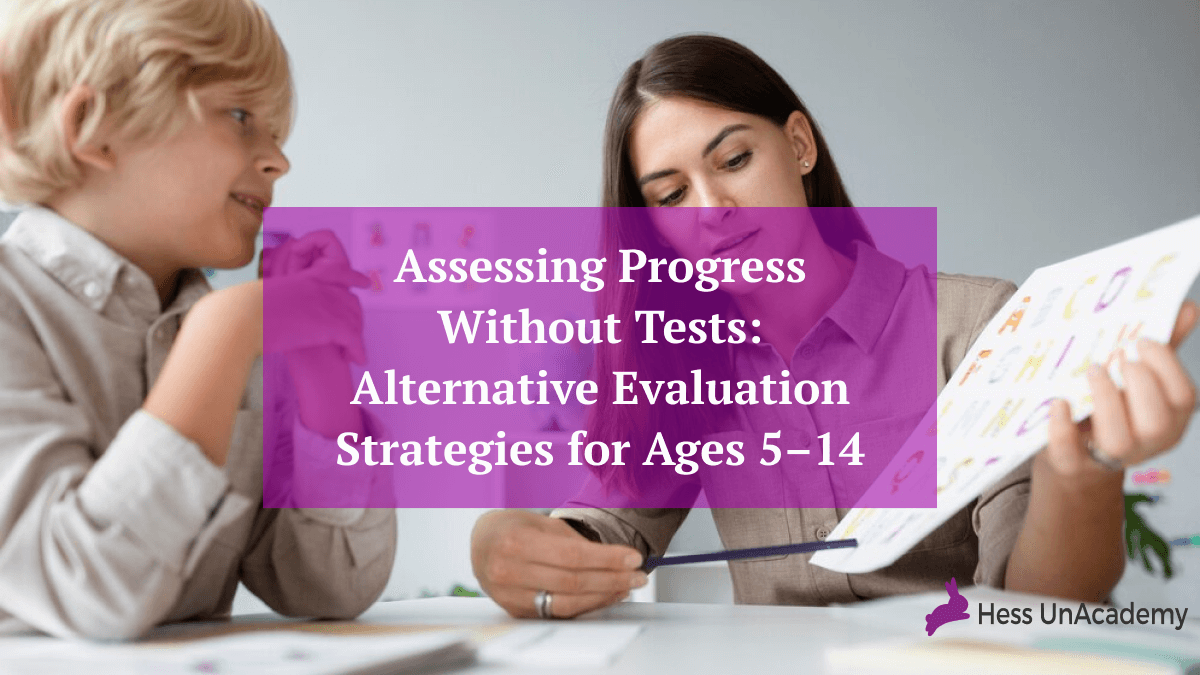
Assessing progress without tests is a growing educational trend as parents, guardians, and educators alike search for more meaningful ways to gauge learning. The traditional test is no longer the sole measure of success, and innovative evaluation strategies are ensuring that each child’s unique talents, creativity, and progress are recognized.
Easy Navigation
Introduction
The landscape of education has evolved significantly in recent years. Gone are the days when a standardized test could fully encapsulate what a student learns. Instead, education professionals and families are gravitating toward assessing progress through alternative methods that focus on long-term growth rather than short-term memorization. This change is particularly impactful for ages 5–14, when children are developing foundational skills and discovering their unique ways of interacting with the world around them.


Why Traditional Testing Falls Short
Curriculum Limitations
Traditional tests are designed to measure recall and basic comprehension, but they often fail to capture deeper learning, creative problem-solving, or critical thinking skills. In many classrooms, the curriculum is squeezed into a format that favors speed over understanding. For example, a child might remember facts for a test but still struggle to apply those facts in real-life situations. Alternative evaluation strategies, on the other hand, emphasize projects, portfolios, and interactive tasks that provide a richer picture of a child’s ongoing learning process.
Stress and Anxiety Considerations
For many young learners, tests can become a significant source of stress and anxiety. The pressure to perform well under timed conditions can detract from their natural curiosity and willingness to explore. By shifting focus away from high-stakes testing, educators and parents can foster a more supportive and confident learning environment. This, in turn, encourages children to take intellectual risks—delving into subjects without fear of failure—and to develop resilience through constructive feedback.
The Impact on Creativity
Conventional tests tend to emphasize a narrow band of academic skills usually measured by multiple-choice questions and standardized answers. This rigid framework leaves little room for creative expression or innovative thinking. In contrast, alternative evaluation methods allow children to showcase their learning through art, storytelling, and hands-on projects. Such approaches celebrate the diverse ways in which children understand and interpret the world, promoting creativity alongside core academics.
Exploring Alternative Evaluation Strategies
Portfolio Assessment
One of the most powerful tools replacing traditional tests is the portfolio. In a portfolio assessment, students compile a collection of work over time, allowing educators to track progress, observe growth, and highlight areas of strength. This method honors the process of learning by showcasing revisions, reflections, and even failures that lead to later success. Parents can engage in this process alongside their children, turning it into a collaborative effort that builds confidence and self-esteem.

Performance-Based Evaluations
Performance-based evaluations shift the focus from written tests to practical application. Whether it’s building a model, conducting a science experiment, or performing a piece of music, these strategies require learners to actively apply what they have learned. Such evaluations offer a more dynamic picture of student abilities. For example, a student might design a small project on renewable energy that integrates math, science, and art. This method not only assesses comprehension but also nurtures interdisciplinary learning.
Observation and Anecdotal Records
Observation provides invaluable insights that formal tests often miss. Educators can assess student behavior, participation, and problem-solving skills by taking anecdotal records during classroom activities. This informal strategy is especially useful in younger learners who may not perform well in standard testing conditions but display remarkable skills in interactive settings. Anecdotal records help highlight moments of breakthrough and capture the individuality of each learner’s journey, leading to a more personalized learning experience.
Self-Assessment & Peer Reviews
Engaging students in self-assessment and peer reviews can transform a classroom. These strategies teach children to critically evaluate their own work and to provide constructive feedback to their classmates. Self-assessment builds a sense of accountability and encourages a growth mindset—it reminds students that learning is an evolving process rather than a fixed destination. Peer feedback, when done respectfully, allows children to learn collaboratively and appreciate diverse perspectives. Technology today has enhanced these methods through digital tools that make self-reflection and peer reviews interactive and engaging.
Integrating Alternative Evaluations into Daily Practice
Setting Clear Learning Objectives
For any evaluation system to be truly effective, it must be aligned with clear, measurable learning objectives. When teachers and parents work together to establish what success looks like, it ensures that alternative evaluations are deliberate and consistent. For example, if a goal is to enhance critical thinking in math, the learning objectives might include problem-solving projects that require applying mathematical concepts to real-world scenarios. With clear goals, each alternative assessment method, from portfolios to performance tasks, naturally fits into the curriculum and provides meaningful feedback.
Leveraging Technology
Technology plays a pivotal role in modern alternative evaluations. Digital platforms enable the storage and sharing of portfolios, interactive assessments, and real-time feedback that can be tracked over time. Tools like educational apps and online discussion forums provide avenues for self-assessment and peer review, making learning both accessible and engaging. When families use these tools, they create a seamless bridge between formal and informal learning. For instance, a child might use a tablet to document a week-long science experiment, upload videos of the process, and even receive instant feedback from educators and peers. Technology not only amplifies these opportunities but also democratizes access to learning resources.


Real World Success Stories
Examples from Homeschooling Environments
Many homeschooling families have successfully implemented alternative evaluation strategies with transformative results. One homeschooling community shared how regularly updating a digital portfolio boosted not only academic performance but also parental engagement. Children were encouraged to interview family members, visit local museums, and create detailed reports on their experiences. This approach provided context to learning and built a culture of curiosity. The portfolio became a living document of the child’s growth, revisited and updated throughout the year—a testament to prolonged learning and self-improvement.
Classroom Innovations
Innovative classrooms that adopt alternative evaluation methods often report a boost in student morale and engagement. For instance, a public school in a bustling urban setting replaced weekly quizzes with project days, where students had the chance to explore topics of personal interest. Teachers observed that such projects not only deepened knowledge but also promoted teamwork and negotiation skills among students. In some cases, the introduction of self-assessment checklists has helped children identify their strengths and target areas for improvement, creating a more balanced approach to academic progress.

Addressing Potential Challenges
Transition from Traditional Testing
Transitioning from traditional tests to alternative evaluations can be challenging for educators, administrators, and even parents who are accustomed to easy-to-measure outputs. The key is to communicate that learning is not confined to a number or a score. When a school or a homeschooling circle begins this transition, it may involve professional development sessions for educators and information workshops for parents. In many cases, gradual integration—starting with one subject or grade level—helps ease the transition while gathering valuable data on student outcomes.
Standardization and Comparability
A commonly raised concern is the issue of standardization. With traditional tests, everyone answers the same questions, making comparisons straightforward. Alternative methods are inherently more personalized, which can make cross-evaluation comparisons more complex. The strategy here is not to eliminate all comparisons but to develop rubrics and guidelines that ensure goals are consistent and measurable. By setting clear criteria, educators and parents can still track progress over time while allowing room for individuality and creative expression.
Time and Resource Management
Implementing alternative evaluation strategies may require more time for preparation and review. Teachers need to collect, review, and provide feedback on portfolios, projects, and observations—a process that is undeniably more time-consuming than administering a set test. However, many educators have found that the time spent can lead to deeper insights into student learning and ultimately more tailored instruction. For families working on homeschooling curricula, resource management might involve using digital tools to streamline tracking progress. With careful planning and possibly communal support or co-teaching groups, the benefits of a more holistic evaluation can far outweigh the extra investment of time.
Fostering a Growth Mindset Through Evaluation
Encouraging Self-Reflection
An essential part of alternative evaluation is fostering a growth mindset. Self-reflection is a tool that helps children internalize that learning is a continuous journey. Educators and parents can guide children to question what they have learned, understand their progress, and set future goals based on self-assessment. Whether through reflective journals or one-on-one discussions, this process helps learners see challenges as opportunities for growth rather than insurmountable obstacles.
Celebrating Process Over Product
One key advantage of non-traditional evaluations is the celebration of the learning process rather than just the end product. When students understand that mistakes are stepping stones to mastery, they are more often willing to try new things and push their boundaries. Educators who adopt this approach highlight critical thinking, creativity, and perseverance alongside academic knowledge. Parents are encouraged to celebrate every small victory with their child, reinforcing the message that progress comes in many forms—not solely through test scores.

Practical Take‑aways and Actionable Tips
Implement Daily Reflection
Set aside a few minutes each day for your child to reflect on what they learned. This can take the form of a simple journal entry, a digital blog post, or even a creative drawing. Ask questions like, “What was your favorite part of today’s lesson?” or “What do you think you could try differently next time?” Daily self-reflection helps instill a habit of accountability and personal growth.
Create a Living Portfolio
Build a portfolio with your child that documents their progress over weeks and months. Include a mixture of work samples such as art projects, science experiments, writing pieces, and recordings of performances or presentations. Not only does this portfolio serve as a record of learning, but it also becomes a cherished keepsake that illustrates how far your child has come. In an age of digital archiving, tools like cloud storage and dedicated educational apps can simplify the process while ensuring easy access and organization.
Encourage Peer Conversations
Organize group discussions where children provide feedback to each other. Such sessions can be informal and fun—perhaps during cooperative learning projects or community activities. Peer reviews encourage mutual respect and allow each student to see different perspectives on the same topic. Making this part of the learning process fosters an environment of collaboration and shared responsibility, key ingredients in building a well-rounded skill set.
Integrate Technology
Explore digital solutions that complement alternative evaluations. Digital portfolios, interactive quizzes that focus on reasoning rather than rote answers, and apps that collect observational data can streamline the process and provide a dynamic record of progress. These tools not only enhance engagement but also equip educators and parents with real-time data, enabling immediate feedback and adjustments in teaching methods.
Set Clear, Attainable Goals
Develop learning objectives together with your child. These goals should be flexible, allowing for adjustments as the child grows and learns. A clear roadmap of what you expect to achieve helps to focus both everyday learning and longer-term projects. Align these goals with the chosen alternative assessments so that every activity contributes to a larger learning narrative.
It is important to remember that every child is unique, and the journey of learning might not always fit within a standardized box. By embracing alternative evaluation strategies, you can better capture the nuances of your child’s growth while nurturing a lifelong habit of self-improvement and curiosity.
In conclusion, moving away from the traditional, one-size-fits-all test model and adopting alternative evaluation strategies has the potential to transform education. It fosters creativity, reduces anxiety, and promotes a holistic understanding of each child’s progress. This paradigm shift is not only beneficial for academic performance but also for nurturing confident, adaptable learners ready to embrace future challenges.
Explore Hess UnAcademy to find a wealth of research-backed, practical tools and guidance that can help you create a more engaged, communicative, and inspiring learning environment at home and in the classroom.
Practical take‑aways: start small by incorporating daily reflections, set up a living portfolio, engage in peer discussions, and leverage technology to monitor progress. Each of these actionable tips reinforces the notion that learning is a personal journey—and every step, no matter how small, is progress worth celebrating.
- Love Languages in Learning: How Children Receive Encouragement Differently - February 2, 2026
- Valentine’s Day Ideas for Homeschoolers - January 25, 2026
- Parent Self-Care & Homeschooling: Why It Matters and 5 Simple Strategies - January 12, 2026