


Today, I am happy to introduce you to Kathy Hutto from kathyahutto.com. Kathy comes to us today with a heart for teaching kids The Bible and incorporating bible studies into homeschools. I am very excited to share with you her thoughts and wisdom.
Here’s Kathy.


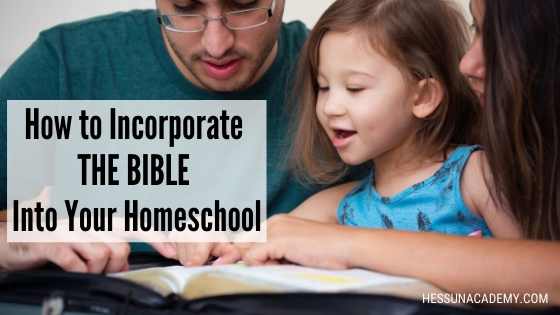

We all want the best for our kids. As homeschool parents, we spend exorbitant amounts of time weeding through catalogs, browsing online websites, and attending conventions around the country to be sure we’re giving little Johnny the very best education our one-income family budgets can provide.
Our goal is to prepare them for the eventual college experience where they’ll be flying solo. Even before that, we want them to achieve high marks on the SAT or CLT so they can land those coveted top scholarships.
We want the best for our kids in every way. But, sometimes we overlook the one best resource that we already own. That resource is the Bible.
This article may contain affiliate links. Please see our disclosure policy for more details.
Easy Navigation
Using The Bible As A Homeschool Resource
As the daughter of a southern Baptist minister, I’ve always known that the Bible was an important book. I’ve grown up having family devotional time to close out the day. I’ve carried that tradition into my own family as we gather nightly for prayer and Scripture reading.
But, something that I neglected until not too many years ago, was teaching my children how to study the Bible for themselves.
I’d assign a secular chapter book such as Charlotte’s Web when they were young or any one of numerous American and British classics when they were older. We would do countless lapbooks, book reports and essays on said books. However, I never thought to incorporate the best book of all into their learning.
Bible reading is beneficial for many reasons.
Long ago, in early American schools and at-home learning, the Bible served as a textbook for reading practice. The ABCs were learned by connecting them to Biblical characters such as Adam, Boaz, and Caleb.


Today, it’s rare that the Bible is incorporated into homeschool education. There are those Christian based curricula that teach from a Biblical worldview and include Bible verses printed amongst the materials being
covered, but the Bible in and of itself has often been neglected as a learning tool.

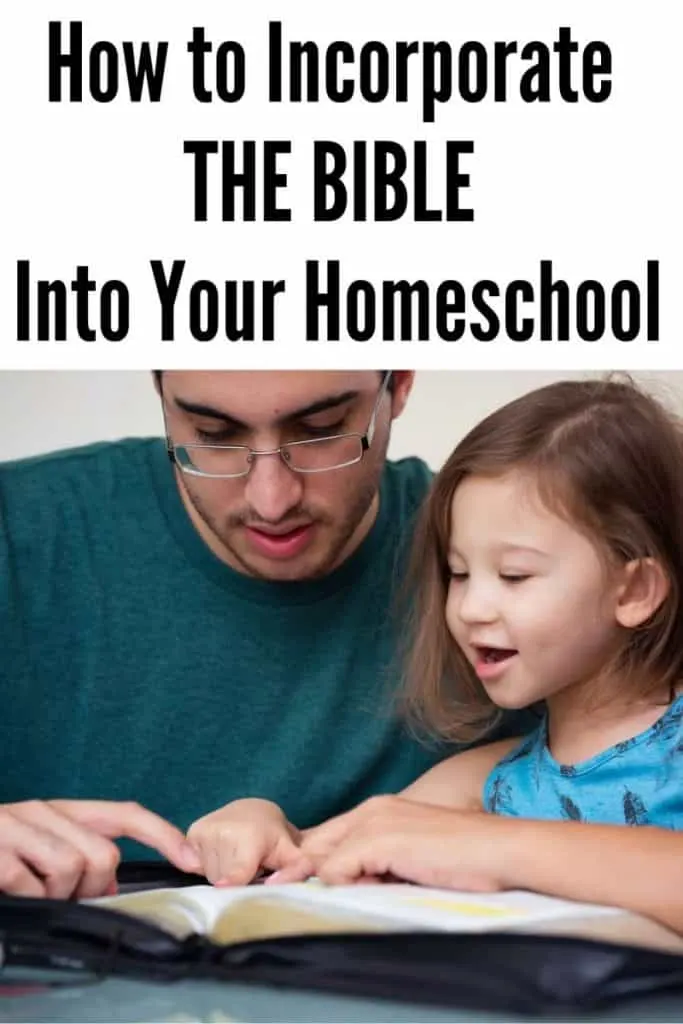
I think that the Bible is overlooked as a necessary component in homeschool education today for several reasons.

One reason may be that we feel it is not an easy read and is hard to understand. Providing a more readable version for young kids could help with this. The NKJV and ESV are options that use more understandable language while maintaining the integrity of the Scriptures.
If you’re uncomfortable switching versions, you could opt for a study Bible with notes at the bottom, which will help explain any hard to read passages.
There are even Study Bibles specifically designed for students.
Another reason we don’t more readily assign Bible reading is that we fear it may create a dread of reading. However, that reason can be quickly eliminated by choosing carefully the passages that will be appealing to children.
For example, preteen girls would enjoy reading the story of Ruth in Ruth 1-4. Boys of this same age-group would equally enjoy reading about the
adventures of David and his 400 men in 1 Samuel 21-26.


Both boys and girls could benefit from reading Proverbs and cataloguing all the wisdom for living that it offers. With thirty-one chapters, this book can be completed in a month’s time by reading just one chapter a day.
Assessing Biblical Learning
Finally, we may not readily include the Bible among our curriculum choices because we aren’t sure how to assess the learning. Along with the other reasons mentioned in this article, this is also an easy fix.
By creating questions or having oral discussions, we will be able to assess
whether our children have read and have thought about what they read.
Assigning reports just as we would assign a traditional book report is an option. Allowing them to write a screenplay and act out scenes is another.
In addition, you could purchase a Bible study such as the ones I write
that are a great first in-depth Bible Study. They take preteens through a small portion of Scripture, leaving them with a feeling of success and training them how to study their own Bibles. The reading passages are divided into manageable and content appropriate chunks with relevant and thoughtful questions throughout.
In addition, short answer versus long writing assignments make these studies fun and not overwhelming.
Another option for assessment is to have a Bible quiz bowl or trivia night and include questions from the selections your children have read. Perhaps doing this once a quarter would assess their retention level as well.
As you begin to peruse those catalogues that are doubtless to be already filling your mailbox this time of year, I hope you won’t dismiss a resource with multiple copies already in your home.
Truly, there can be no greater book that offers eternal rewards than the Bible. Think creatively about ideas to get your kids to read it. And when you crack open that new planner and write 2020-2021 in it, I hope that the first subject that you list is, “Bible.”
Related Posts:
- Raising Kids of Character
- Teaching Kids Prayer in Your Homeschool
- What Does God Have to Do With Success?
- Best Books on Homeschooling
- Free Printable Valentine Multiplication Worksheets - June 4, 2025
- Free Printable Martin Luther King, Jr. Word Scramble - June 4, 2025
- Digital Math Curriculum | Pros, Cons, and Options - June 4, 2025