


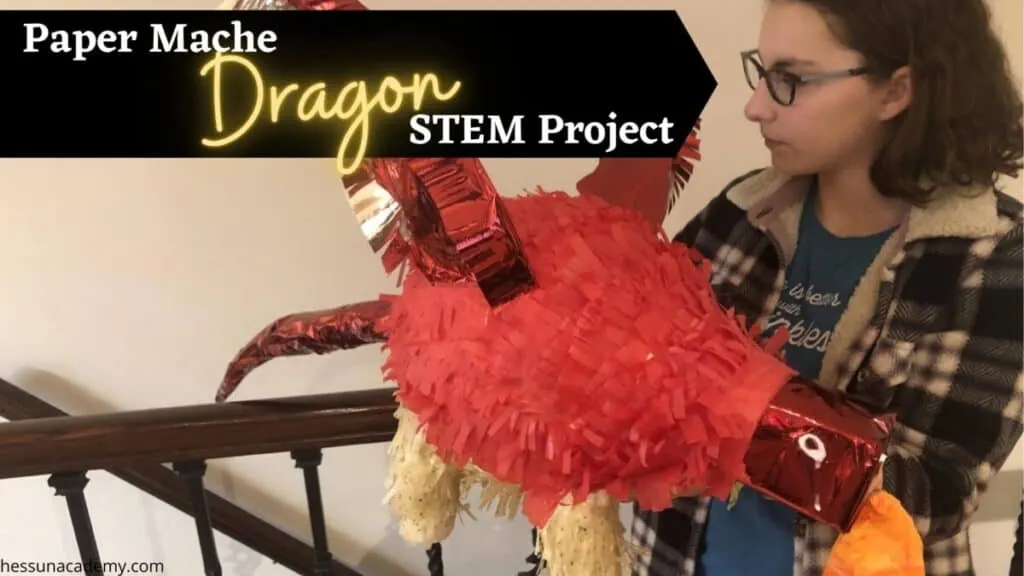
Would you like to make your very own dragon out of paper mache? Paper mache dragon projects, such as this STEM and craft project, are tons of fun for kids and adults alike. Whether you are preparing for a dragon-themed birthday party, a Chinese New Year celebration, or just want to enjoy some hands-on STEM activities with your kids, this is the tutorial for you!
If you like this project, be sure to check out our entire collection of Dragon STEM activities for kids. These hands-on activities are perfect for all the dragon lovers in your home.


This article may contain affiliate links. Please see our disclosure policy for more details.

Easy Navigation
Why Consider Paper Mache As A STEM Activity
There is so much to be learned from a paper mache project!
When making your dragon, you need to create a sturdy base to hold your paper mache. Not all the pieces you are using will fit together neatly. You can practice being a structural engineer as you figure out how to fill in areas that do not fit together nicely.
You will also be an artist. What colors do you want on your dragon? What parts will ensure that your dragon looks like a dragon and not a flying pig?


This project is a great way to explore how shapes fit together and to practice troubleshooting skills in real life. Paper mache is very forgiving so even though you will most likely encounter problems as you work on your project, you can also find lots of ways to fix those problems and bring your dragon to successful completion.
How To Make A Dragon Out Of Paper Mache
Today we’re going to teach you how to make your very out dragon out of paper mache!


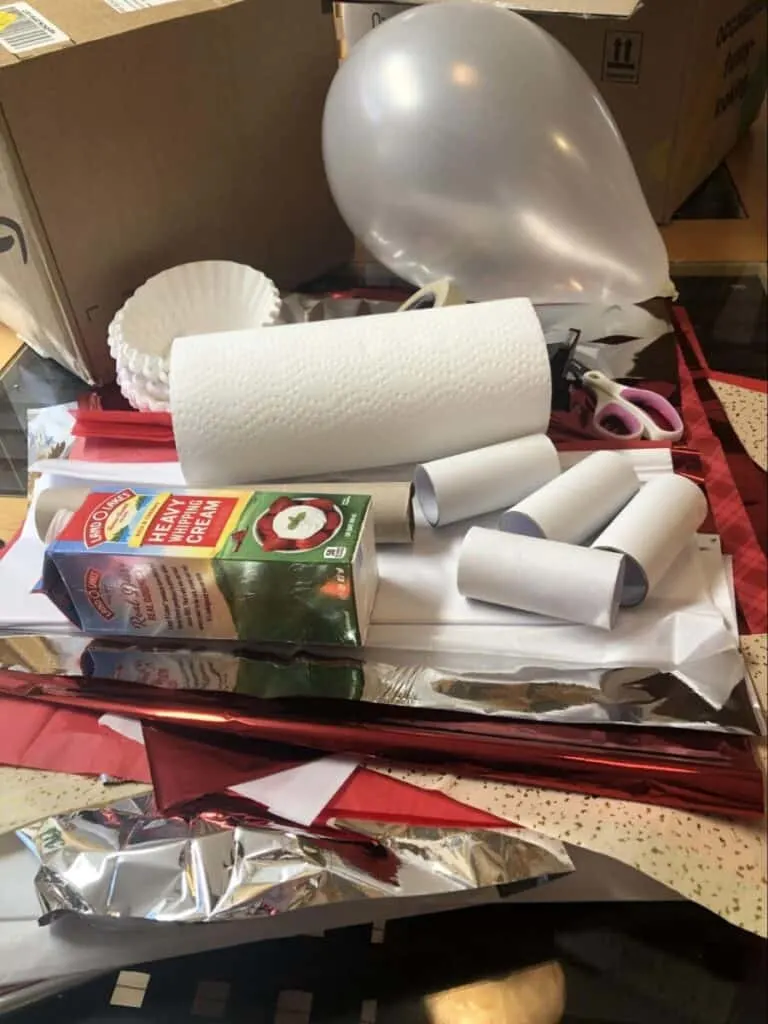
Materials Needed
- Paper towls (you can use newspaper if you like)
- Balloon(s)
- Toilet paper and/or paper towel tubes
- Cardboard
- Tape
- Glue
- Coffee filters
- Flour
- Water
- Dish (casserole or cake pan work well)
- Tissue paper
- Empty cream carton

Paper Mache Dragon Tutorial
Follow this paper mache dragon tutorial and soon you’ll have your very own completed project!
Initial Prep and Set-up
- Cut a bunch of paper towles into about 2 inch wide strips. (We cut way too many!)


- Find all the pieces you will need to build your dragon.

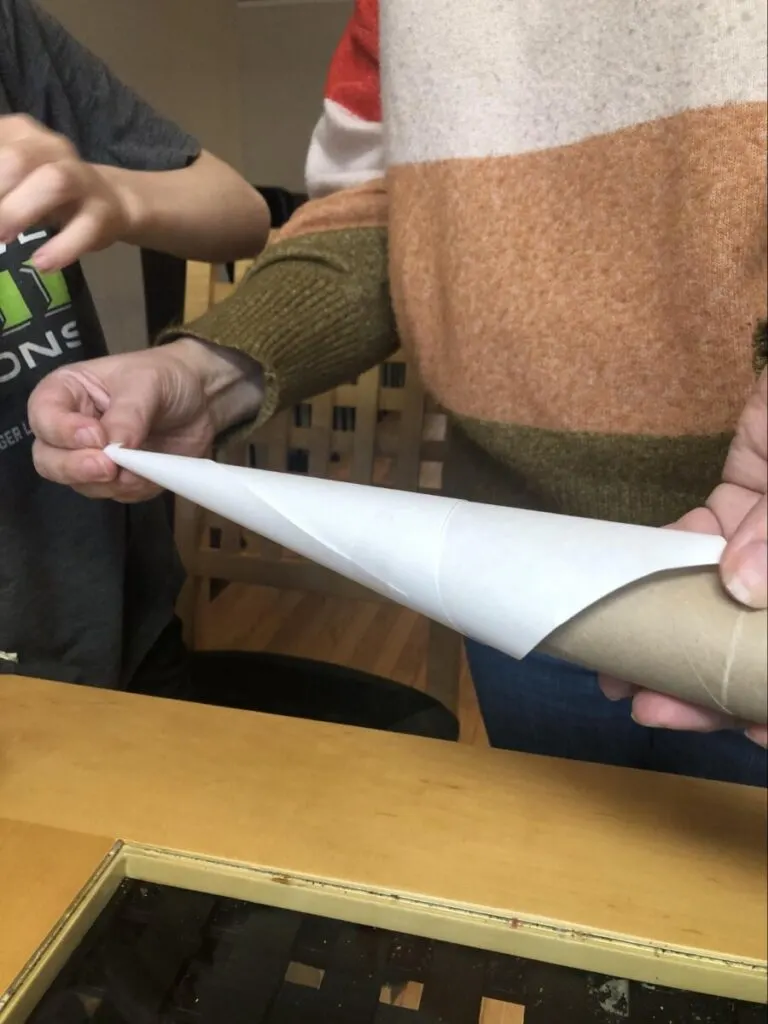
- Cut those pieces into needed shapes and sizes.


- Think about the colors/design you want to use on the outer layer of your dragon.
Project Steps
STEP 1 – Build Your Dragon
- Tape the legs onto your dragon body.

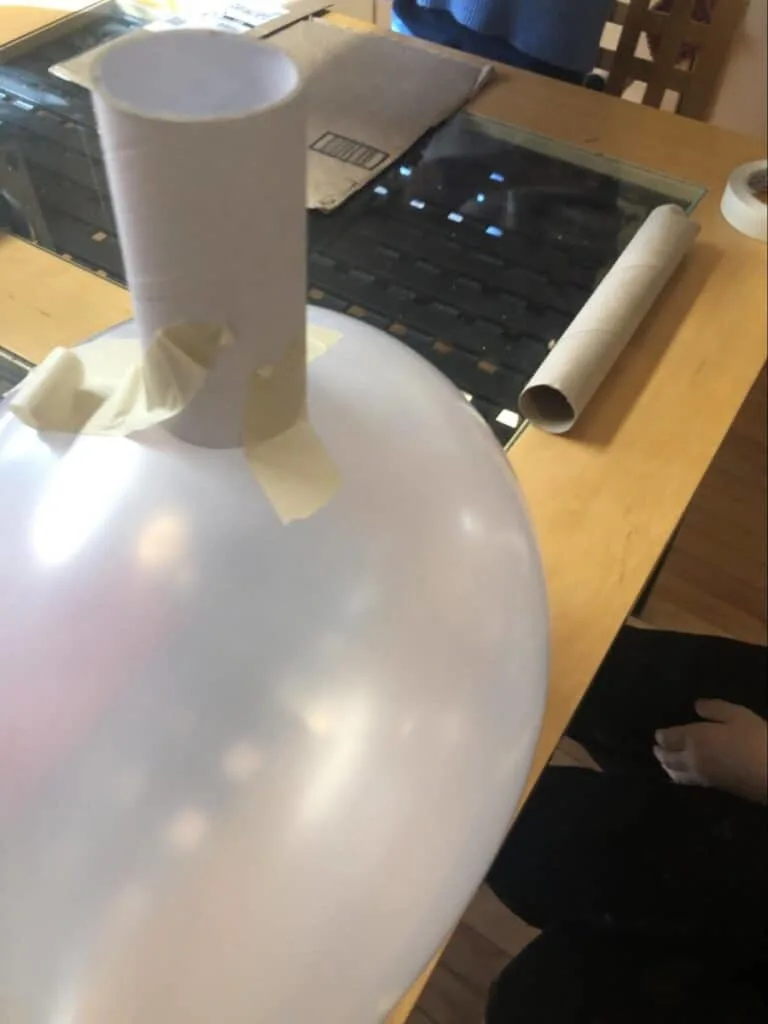
- Add the tail, head, and wings. (See tip about wings – you may want to save them for a finishing touch, especially with younger children.

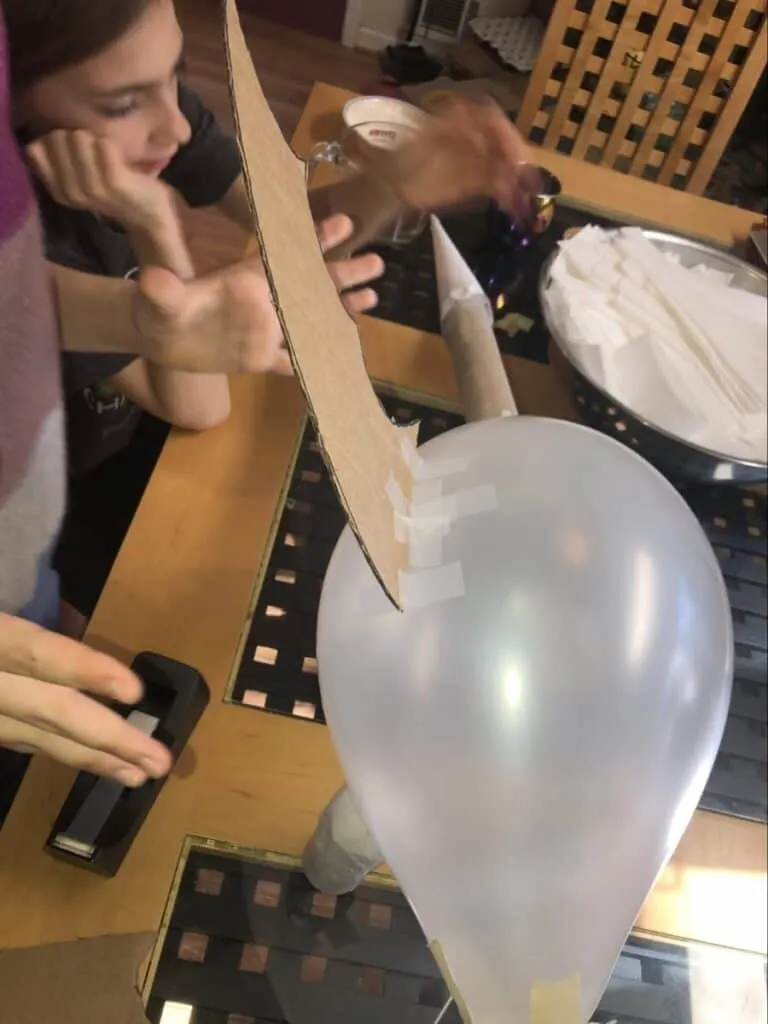
- Reinforce the balloon body by covering it with coffee filters. (This helps ensure the balloon does not pop during handling.)


STEP 2 – Cover The Dragon With Paper Mache


- Mix 1 cup flour with 1 cup water

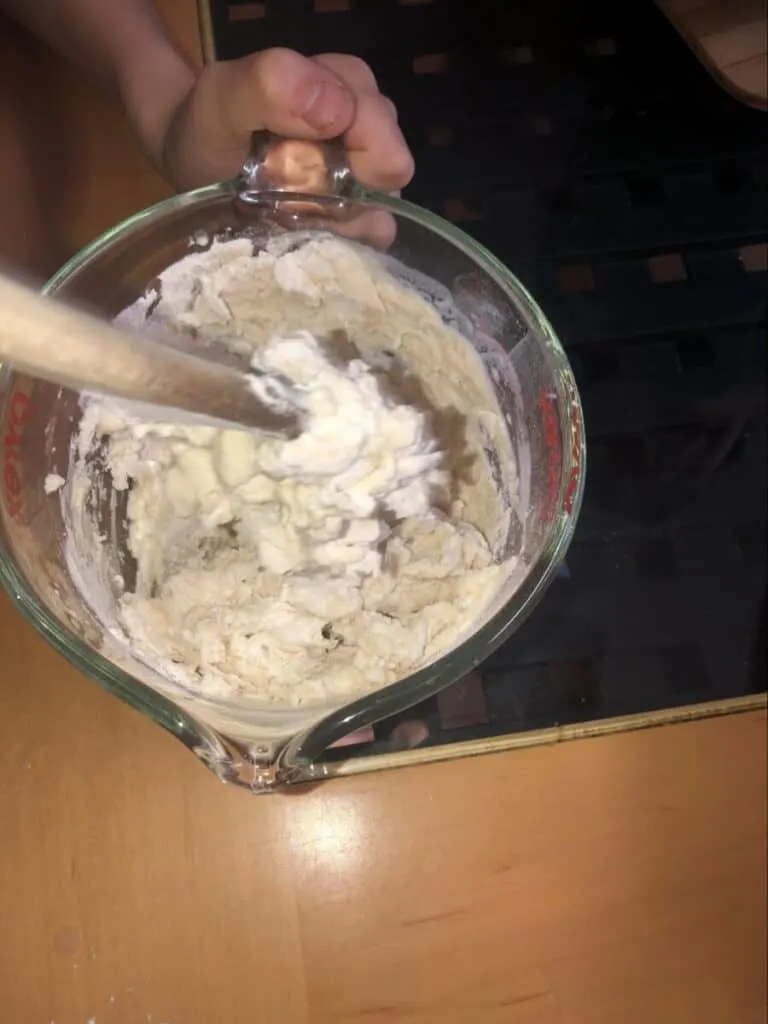
- Place mixture in a pan long enough that you can lay your paper towel strips inside.

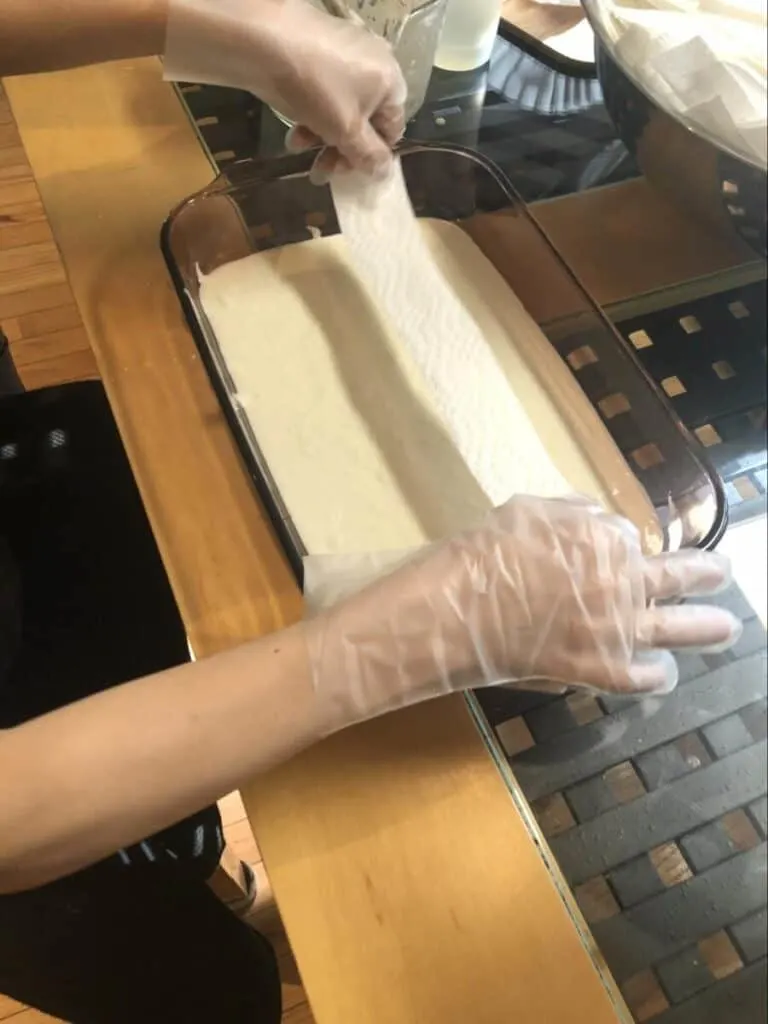
- Lay paper towel strips on the flour mixture, lift, and place directly onto your dragon.


- Cover all upper areas of your dragon then place near a fan to dry.

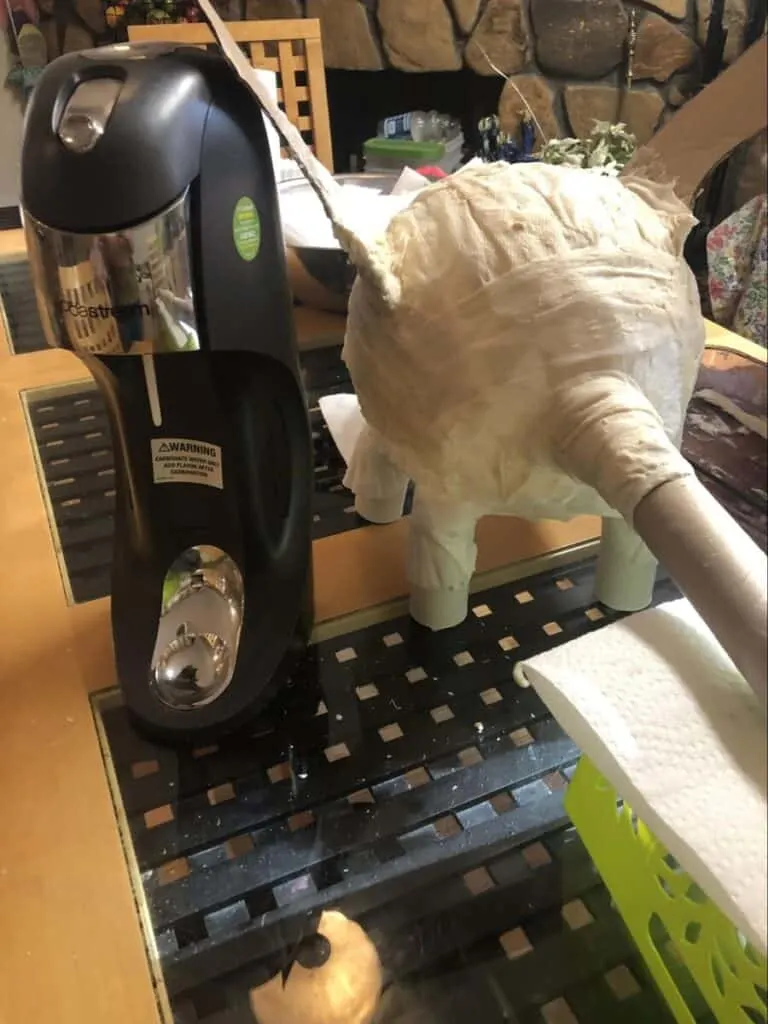
- Drying time is usually about 24 hours.
- Check your dragon for weak spots. You may need to add another layer everywhere or just touch up certain spots. The whole body of the dragon should feel very hard and stiff.
- If using newspapers or thin paper towls, you may need to repeat for 2 or 3 more layers.
- If using double ply paper towels, one layer may be enough.
STEP 3 – Decorate Your Dragon
FOR THE FRINGE LOOK –
- Cut strips of tissue paper into about 2 inch wide strips and then fringe the edges.

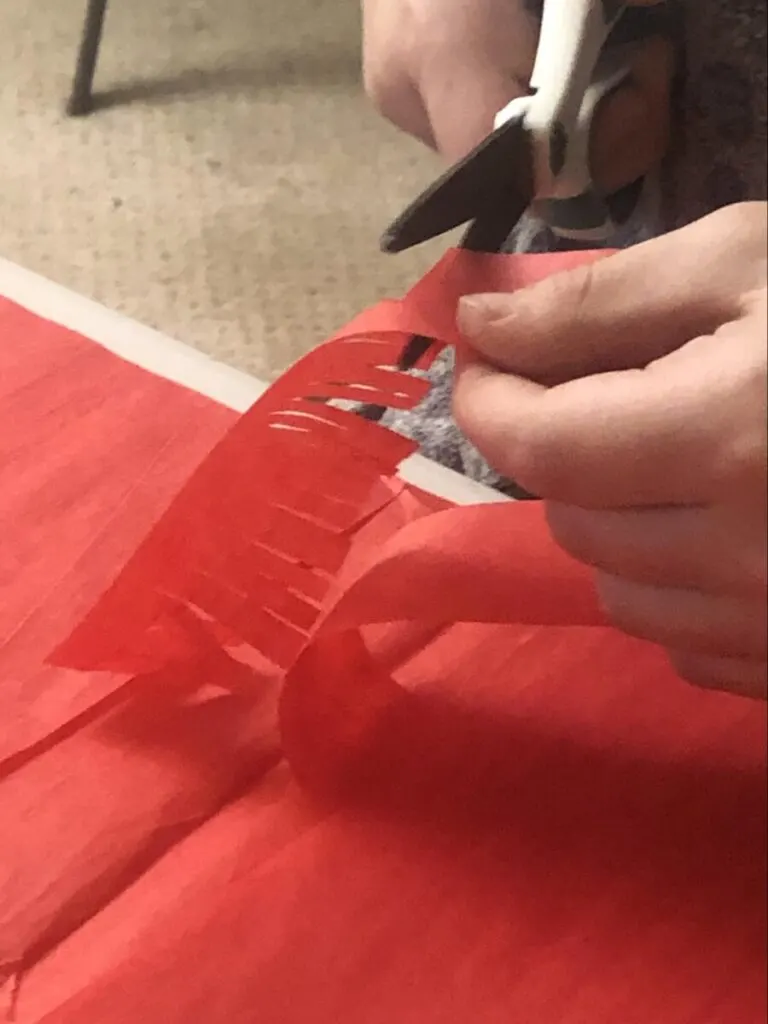
- Glue the edge of the fringe to the dragon making sure they are overlapping.

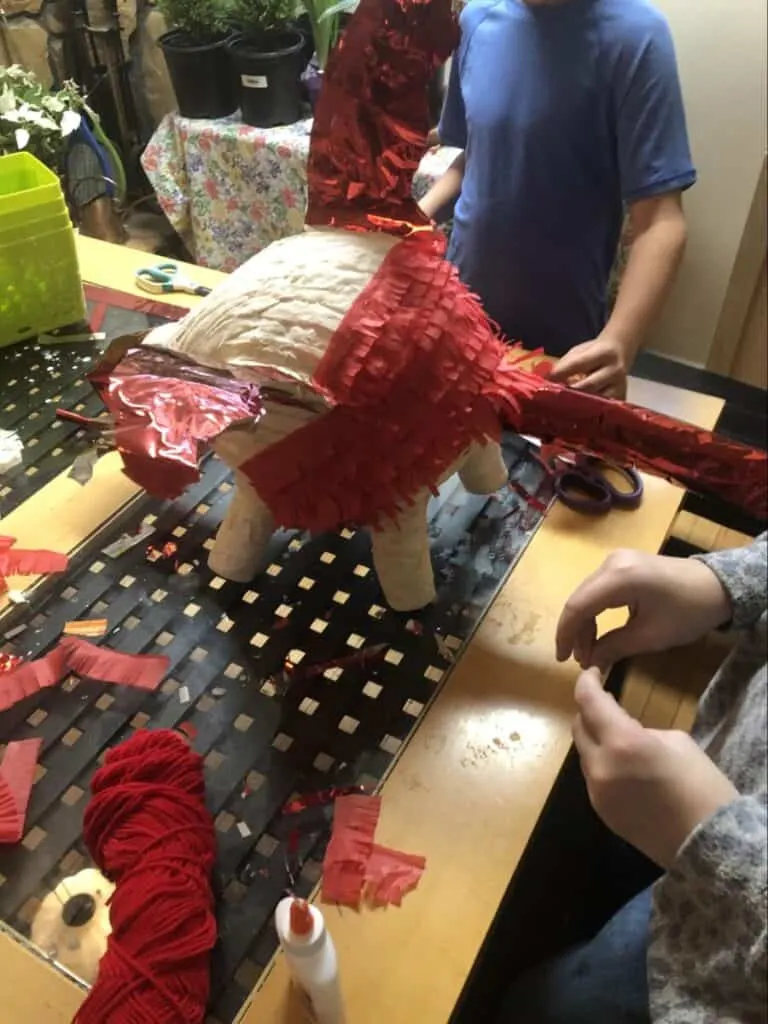
- You can cover the entire dragon with fringe if you like.
OTHER DRAGON DETAILS –

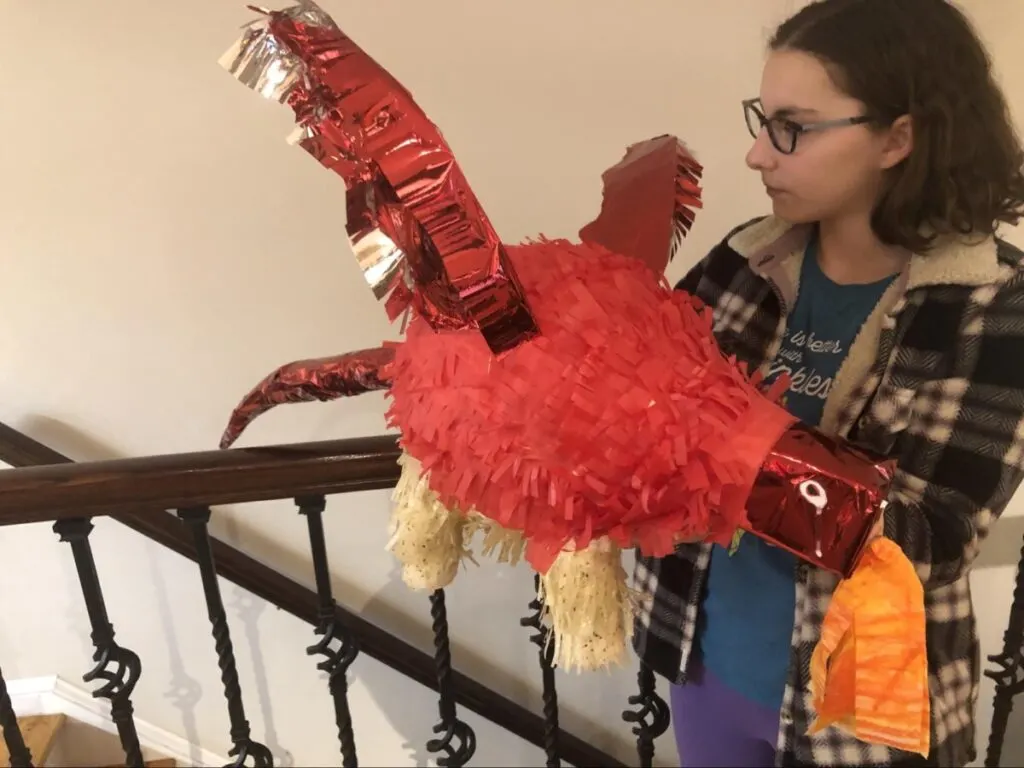
- For our dragon, we cut shiny tissue paper and laid it flat for the wings, head, and tail.

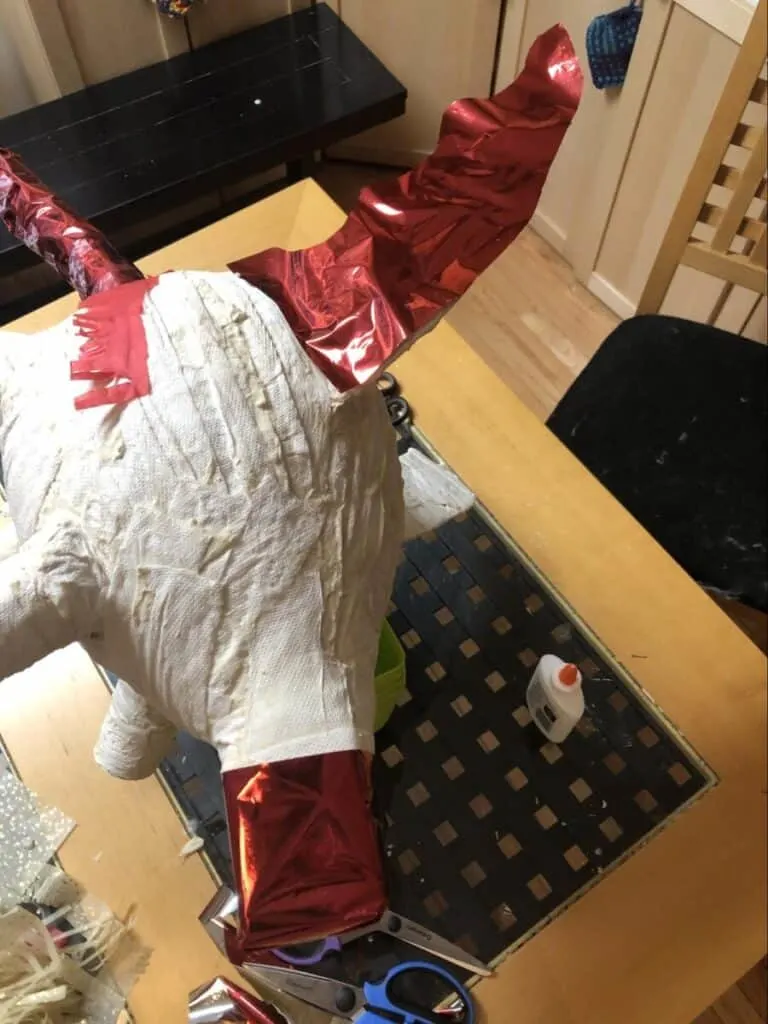
- Create some eyes. We just drew the eye onto white paper, cut it out, and glued it on.
- Cut out a few round pieces and glue them on the front for nostrils.
- For fire – Color a piece of white tissue paper with orange and yellow crayon or markers.

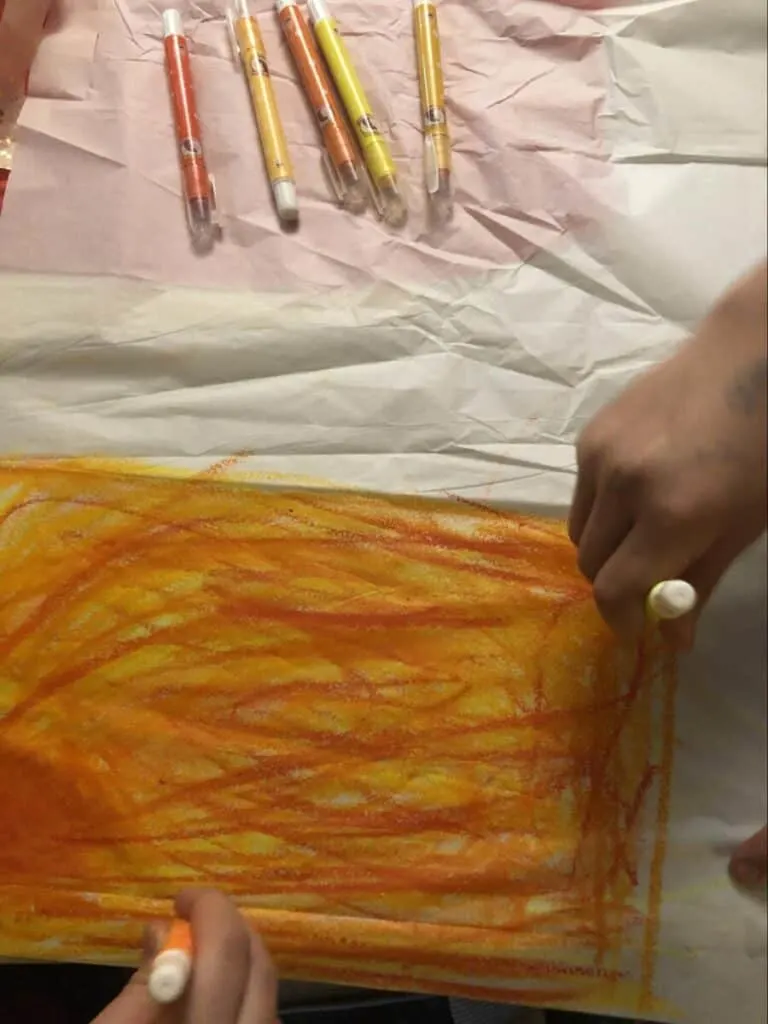
- Cut into strips.
- Gather together at one end and tie them together with a string.

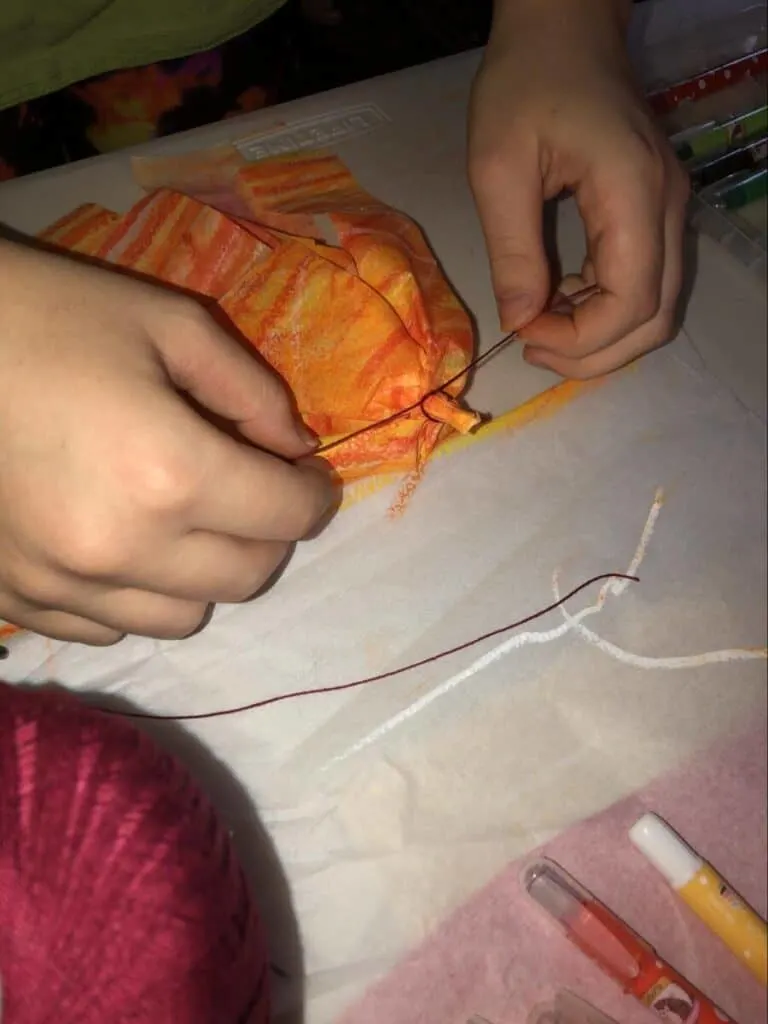
- Tape the gathered end to the dragon’s mouth.


- Cover the gathered end with a strip from one of the pieces of fire.
The Science And STEM Behind Paper Mache
Engineers and artists both play with shapes. They also have to problem solve when the shapes they need to use don’t fit together neatly.
Making a paper mache dragon is a great way to explore how engineers have to think about supporting the structures they build. You will find that sometimes the pieces needed for one part of a project do not fit neatly with the other pieces.
In real life, structural engineers have these same problems.
They have to make projects strong enough to hold the weight they will bear both during construction and use.
They have to make extra pieces to make things work or change the pieces they planned to use.


Computers help engineers see if things will or will not fit together and if they will be strong enough before they start building.
Like engineers, artists also spend a lot of time thinking about how shapes fit together. What shapes will make their project fit best? Where should they overlap shapes? How will they connect two shapes in a drawing with making a visual mess?
Be creative with this project. There is a basic design here to get you started. However, you may have a better design. Or you may not have the exact pieces we used. Try to think about what you can use instead.
As you work on your paper mache dragon, you may think of better ways of building the next time. This happens in real life too!
Engineers get better and better at building things and they share their ideas with other engineers and the products they make become better, stronger, and sometimes even cheaper, because of this process.
It is kind of like brainstorming, only it happens within a large community of brains, instead of just one person’s brain. And it is inspired by the work done, projects completed, and mistakes made, by all those collective brains.
Sharing ideas is an important part of science, technology, engineering, art, and even mathematics. (Over time, mathematicians have built upon the ideas of other mathematicians to discover all the deep secrets of numbers.)

Follow-Up Questions
After completing this activity, ask your kids the following questions. Encourage critical thinking and an in-depth discussion.
- Did you have any structural problems while building your dragon? How did you solve the problem(s)?
- Is there anything you would do differently if you built another paper mache dragon?
- What could you use for the body of a dragon other than a balloon?
- What do you think people used before bottled glue was invented?
Follow-Up Activities
Consider enjoying some of these follow-up activities with your kids for even more dragon STEM fun!
- Look up some pictures of paper mache dragons. There are artists and engineers who make very beautiful paper mache dragons!
- Look up recipes for homemade glues. You will find several interesting variations. Make some other glue recipes and try them out. Compare and contrast various glues.
- Research the history of dragons, specifically in various cultures.
- Consider adding this Medieval Times Unit Study to your studies.
Paper Mache Dragon Tips and Tricks
Follow these tips and tricks for an even more pleasant experience making your own dragon out of paper mache!
- For younger kids I would save the wings for the end of the project. Just cut them out of cardstock and glue or tape them on before adding the fringe.
- If you are adding wings at the beginning, be careful not to add too much weight with the paper mache or they will sag. We found it worked better to dilute our mixture to 1 cup water ½ cup flour and pull our 2 ply paper towel apart. This thinner method hardened the wings without adding so much weight that they got droopy.
- If the wings, tail, or head do start to droop under the weight, you can prop them up with something while drying.
- Parchment paper laid down under your project can save you from a lot of mess. The flour and glue mixture will harden to anything it drips on, and will go through absorbent coverings (such as newspaper).
- Don’t dump the glue flour mix down the drain without adding a lot more water first. You don’t want that hardening in your drains.
- Also, we found it best to just mix 1 cup of mixture at a time as we were working. This kept us from having too much mixture and gave us nice breaks so we didn’t get tired of the project.
More STEM Resources for Kids (Including A Free Printable)
If you liked this activity, you are going to love the STEM Made Easy Digital Subscription. Each month, you receive a project pack that includes 5 fully planned STEM project guides along with worksheets and instructions for how to make them fun and engaging for kids ages 3-19.


Want a free project sample? Sign up to get a complete 39-page project guide sent to you so you can see exactly what’s inside each of the STEM Made Easy Digital Subscription project pack.
I’ve also got this ultimate list of STEAM and STEM activities for kids of all ages if you want to take a look.
More Dragon STEM and Science Experiments
Speaking of dragons, be sure to check out these other fun dragon STEM activities for kids!
Or try more general STEM projects with year-round themes and topics.
- Free Printable Valentine Multiplication Worksheets - June 4, 2025
- Free Printable Martin Luther King, Jr. Word Scramble - June 4, 2025
- Digital Math Curriculum | Pros, Cons, and Options - June 4, 2025
jon
Wednesday 20th of November 2024
great. But people need to stop labelling everything as STEM. Been doing it for years, when it is just standard arts and crafts projects, which STEM has jumped onto and found an aspect they can call 'STEM'.
S J
Monday 2nd of December 2024
I understand your point, and it's a valid perspective. The term "STEM" (Science, Technology, Engineering, and Math) has definitely become more widely used to describe a range of educational activities, sometimes even beyond its strict academic definition. It's important to recognize that many traditional arts and crafts projects, like making a paper mache dragon, can incorporate elements of STEM, even if the project itself isn't exclusively focused on one of the STEM disciplines.
For example, when creating a paper mache dragon, students can explore the engineering aspect by thinking about structure and balance, or even experimenting with the science of materials and how paper and glue interact. While these activities might have started out as arts and crafts, the incorporation of problem-solving, design, and exploration aligns them with STEM principles. The key is how the activity is framed and the learning outcomes that are emphasized.
That said, it’s always valuable to be clear about how and why an activity is labeled as STEM so that the educational value isn’t lost. It’s all about how we define and communicate those learning experiences! Thanks for sharing your thoughts.