

This article may contain affiliate links. Please see our disclosure policy for more details.


4 Simple Ways To Keep Your Child Stimulated When Schooling At Home


Before you start up the new school year, we recommend you take some time to think ahead. Eventually your homeschooling routine will start to drag and you’ll need to change things up a bit. That said, to prevent getting stuck in a rut, we recommend these four simple ways in which you can keep your child stimulated while having school at home.
Easy Navigation
#1 Decide On Shared Homeschooling Goals – and then Work Towards Them Together
Working through an endless list of lessons and assignments that your kids need to get done while you’re homeschooling isn’t going to keep them stimulated long term. Let them take more control over their learning so that they feel more motivated.
Sit down with your kids and work with them to come up with a plan and goals that incorporate all the lessons they need to do but also in a way that they’re engaged with. By getting them on board with the goals you’re setting they are going to be far more motivated going forward and school at home will be a lot less frustrating.
For example, outline everything you need to cover at the beginning of the week, but let your kids choose what they do on which days, and incorporate some extra time for their favorite lessons.
It’s important to regularly review your progress, so take some time out each week to talk about what you’ve covered, whether you’ve met your goals regarding lesson plans and activities, and recognize their achievements.


#2 Adapt the Lesson Plans to Your Kids
Homeschooling doesn’t always have to follow a strict schedule, changing things up, and finding new ways to educate your kids will help them to stay engaged. You’ve probably figured out by now which are your kid’s favorite subjects, and which ones they’re struggling with. Take advantage of this knowledge and you will all love school at home a whole lot more.
Find different ways to teach them the subjects they don’t like. It doesn’t need to just be reading and writing. Use videos, activities, and practical lessons that get them more involved in the learning process. Even public school districts do this to some degree!
For example, change up their English lessons by getting them to act out the stories they’re reading with props. Or use cooking lessons to teach them how to weigh and count out ingredients and adding them up to engage them with Math lessons. Cooking with Kids has lots of child-friendly recipes that will teach them about cooking, food, and healthy eating.
There are also a lot of educational games your child can play to make their learning more fun. Or of online learning is more your thing, try some online learning games.


If you’re going to be learning how to homeschool anyway, you might as well make your homeschool curriculum fun!
#3 Incorporate Play Into Homeschooling
Playing isn’t just fun for kids, but it’s also another way that they can learn. It’s an important part of their education that teaches them social skills, creativity, problem-solving and analytical skills. It can also help improve your child’s self-confidence, plus there’s plenty of ways to incorporate learning into their playtime.

Try adding regular breaks for play into your remote learning, homeschool schedule. It will give them some valuable time to learn other skills in a less formal setting, and taking a break will help them to engage more with the rest of the lessons.
Set up different play activities for them such as building a den, painting or crafting, an obstacle course, or providing a few props for imaginative play.
You could also sign up for a kids’ subscription box like KiwiCo (50% off if you use our referral link!) that come with everything your children need for educational make-and-play activities. A make-and-play activity provides the perfect opportunity for child-led play. They can have fun playing and express their creativity while also learning valuable skills such as problem-solving and emotional intelligence.
Playing is a valuable way for your child to learn away from formal teaching. It gives them the freedom to express themselves and experiment with solving problems with trial and error. And it’s a good way to take a break out of your distance learning schedule to keep your child stimulated.
#4 At-Home Learning – Outdoors!
Take a break from sitting down inside and get your kids outside in the garden or in a park. There are lots of things they can learn outside, plus doing something more active will help burn off some energy so they can focus more.


You could set children off on a bug hunt, and incorporate that into your biology lessons. Do some physical education lessons to keep them active. Or better yet, plan and execute some fun field trips! Kids pre-k through high school love field trips. Even your grumpy middle school tween is likely to share a smile if you take them on an educational adventure. (Most homeschoolers agree that field trips is one of the best parts about school at home.) Plus it’s easy to engage every grade level, even if you go on a large group field trip.
If you’re looking for more at-home learning outdoors ideas, you could also do some gardening – plant something easy to grow like sunflowers or lettuce and then show them how to look after them. You can explain what the seeds need to grow – sunlight, water, nutrients, air, and the right temperature. This is an engaging way to teach them about nature and important lessons like photosynthesis.
If you need a bit of inspiration, Kids Do: Gardening has lots of activities and projects for kids to do in the garden and some that can be done indoors as well. It also has recommendations for children’s growing kits to help you get started.
Homeschooling doesn’t have to mean sitting your child down with a textbook for hours on end. Break up your routine, let your kids get involved with the planning, and incorporate some fun into your schedule to keep them engaged and stimulated.
Get a Bonus Free STEM Project Sent to Your Inbox
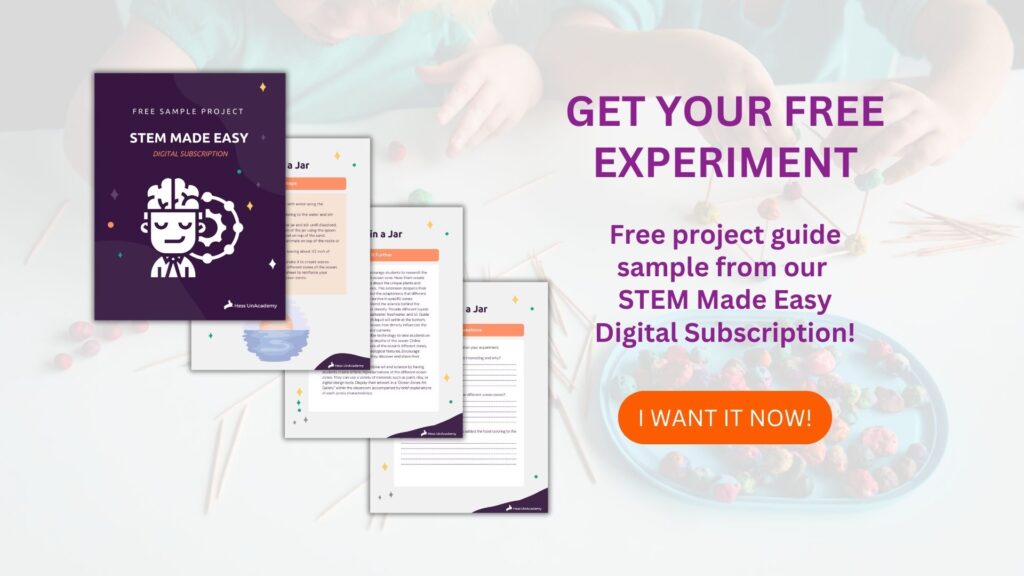
Want a free STEM project to do with your kids? Click the button below to sign up to have an exclusive project guide sent to you so you can see exactly what to expect from our popular STEM Made Easy Digital Subscription.
Or read more about the other STEM Made Easy Digital Subscription here. Each month includes 5 STEM project guides along with step-by-step instructions, worksheets, and extra learning resources to make STEM fun and engaging for kids ages 3-19.
Related Posts:
5 Back To Homeschool Tips
The Best Deals for Homeschoolers on Amazon Prime
50+ Kids Learning Games
Homeschool Scheduling Ideas
- Free Printable Valentine Multiplication Worksheets - June 4, 2025
- Free Printable Martin Luther King, Jr. Word Scramble - June 4, 2025
- Digital Math Curriculum | Pros, Cons, and Options - June 4, 2025