

Here at Hess UnAcademy, we know homeschooling can be scary. That’s why we’re sharing our top homeschool curriculum tips, resources, and storage ideas with you.
Homeschooling can be a great way to provide your children with an education that is tailored specifically to their needs. It also allows you to have more control over what they are learning and how they are learning it.


When it comes to homeschooling, though, the options can be overwhelming. Curriculum materials can be expensive and take up a lot of space.


But don’t worry! You don’t need much money or space to homeschool your children.
In this post, we will give you tips on finding affordable homeschool curriculum, ways to store your materials, and resources for further reading.
So read on, parents! Your kids deserve the best education possible, and homeschooling is one of the best ways to make that happen
Easy Navigation
Homeschool Curriculum Tips
Once you’ve solved the initial how do I start homeschooling questions, the next step is to decide what curriculum or lesson plans you will use. Shopping for a new homeschool curriculum can be overwhelming, but it doesn’t have to be. This is why I’ve put together these homeschool curriculum tips for you.

There are a few things to take into consideration when curriculum shopping. These include:
- Your budget (perhaps the deciding factor for all other options)
- Number of kids
- Your kids’ learning style(s)
- Your teaching style
- If your kid(s) have any special needs
- Your preferred homeschooling method (links to popular methods near the middle of the post)
- Your preferred homeschool schedule
- Do you prefer digital or physical resources?
- Do you want a secular or a Christian homeschool curriculum?
Homeschool Curriculum Comparison
Do you know which is the best homeschool curriculum for beginners? What is a good homeschool curriculum?
I’ve gathered some in-depth homeschool curriculum comparison guides for you to use when considering your next curriculum.
Take a look at the features of some of the most popular curriculum options. Decide which is the best homeschool curriculum for your child. Then go read some homeschool curriculum reviews!


Additionally, I have begun releasing a collection of STEM books that can easily double as a homeschool STEM curriculum that the entire family can enjoy.
Take a look at our first one, the STEM Made Easy Edibles Edition book or our second one, the STEM Made Easy Dragons Edition. Many more to follow!

And I’m in the process of writing a few more incredibly comprehensive guides to add to this list, so stay tuned. I hope to solve all of your curriculum shopping concerns.
Or if you prefer, piecemeal some of these resources to build the best homeschool curriculum for your family.


This article may contain affiliate links. Please see our disclosure policy for more details.
Discounts on Homeschool Curriculum and Resources
A lot of people think that homeschool curriculums are expensive – and in reality, a lot of them are! But not every homeschool curriculum or resource needs to break the bank. In fact, if you know where to look, there are discounts to be had on homeschool curriculum and resources!
One of the most popular choices for curriculum discounts used to be The Homeschool Buyer’s Co-op. However, they have been involved in some pretty fraudulent activities of late, plus they have been stealing from their affiliates, so I no longer promote them or recommend them.
Some of my favorite homeschooling resources, including CTCMath and Reading Eggs, have regular discounts on subscriptions for homeschoolers.
Related – Read my Honest Review of CTCMath here.
Another great resource for homeschool tools and resources is, surprisingly, Amazon. In fact, my best-kept secret to finding awesome, little-heard-of resources that really shine in my homeschool is browsing Amazon. I’ve put together a list of fantastic homeschool deals on Amazon Prime if you want to take a look. There is a surprising amount of affordable tools for homeschoolers to take advantage of.
Other highly-rated homeschool curriculum resources that we’ve enjoyed in the past include:
- Beautiful Feet
- Rabbit Trails Through Literature
- Sonlight
- MoneyTime Financial Literacy Games
- Vocabulary Quest
- Educational Board Games
- STEAM Activities
- Computer Games
- Typing Practice
- Free Typing Games
- Cursive Workbooks
- Build Your Bundle
- CTCMath
- HOMER Reading
- P.E. Courses
Or unit studies for homeschoolers are very popular options as well.

Unconventional Homeschooling Curriculums and Resources | Homeschool Tips For Beginners
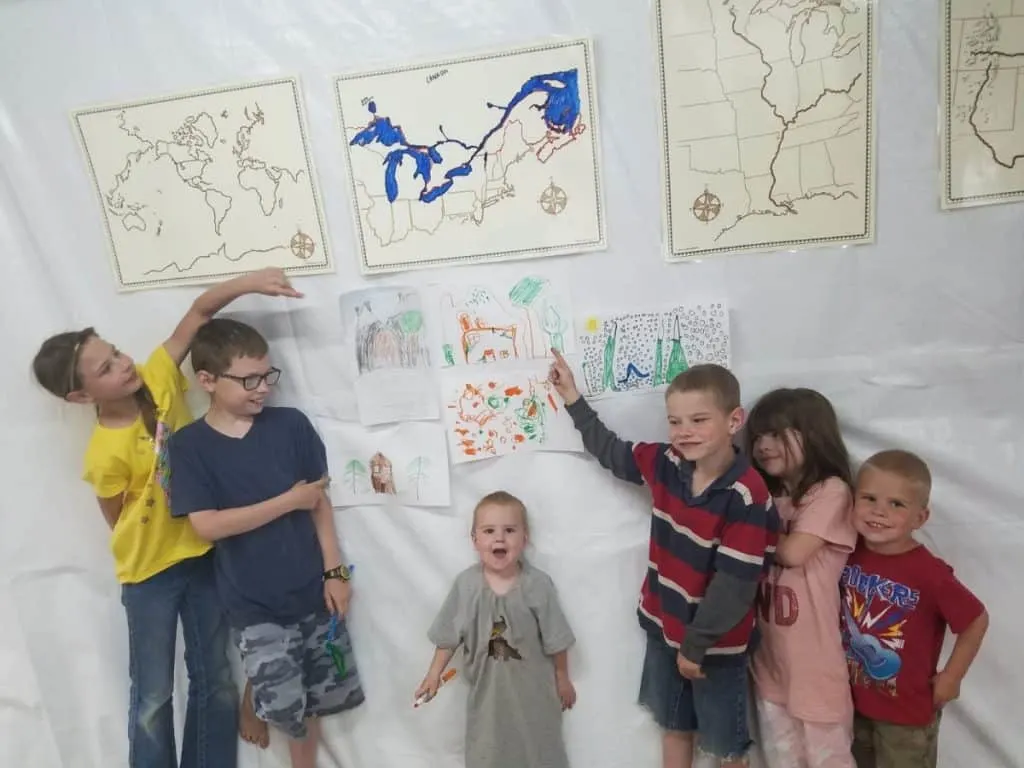
Did you know that you don’t need to purchase an official homeschool curriculum in order to successfully educate your children? It’s true! If you’re willing to get a little bit creative and let go of the status quo, there are limitless options when it comes to homeschooling curriculums and resources.
For starters, let’s talk about using movies in your homeschool. Movies are surprisingly educational and there are so many ways to turn a simple movie into a week’s, or even an entire unit’s worth of educational adventures.

Just reading books is also a creative way to educate your kids. You don’t need a textbook or a worksheet to teach your kids (although there is nothing wrong with worksheets and plenty of families have success with them). Reading about the world or cultures around them will teach them more than many textbooks ever could, plus reading together is a good way to bond.
Field trips are yet another simple example of unconventional learning. Field trips can be used independently or in conjunction with any other homeschooling tool you have at your disposal.
Last but not least we have learning games. Learning games and educational board games are useful for either supporting and enhancing a subject you are already studying in some other method.
Actually, many homeschooling families never once crack open a textbook or a curriculum and instead homeschool 100% with educational games.
This method of schooling is called gameschooling and its participants find it very successful (and fun!).
Homeschool Book and Curriculum Storage
So you’ve purchased all the best homeschool books and you’ve invested in the perfect homeschool curriculum, but how on earth are you going to organize everything? The answer to the perfect organization doesn’t lie in having a Pinterest-perfect homeschool room.
Unless you’re participating in an exclusively online homeschool, you’re going to have to find an organizational method that you are able to stay on top of. In fact, the perfect book and curriculum storage is all about finding a system that’s practical for your family.
Book and Curriculum Organization – The 3 B’s
When it comes to book and curriculum organization, there are three B’s to consider:
- Baskets
- Bins
- Binders
In most cases, you can easily organize any size reading books, workbooks, and teacher’s guides in one of these three storage options. Bookshelves are amazing for separating books and curriculum by age/grade, genre, most used, and so on.
The thing to remember is labeling your sections. Labels will make it easier for you, your kids, your partner, or even your grandmother/substitute teacher to find things when needed.
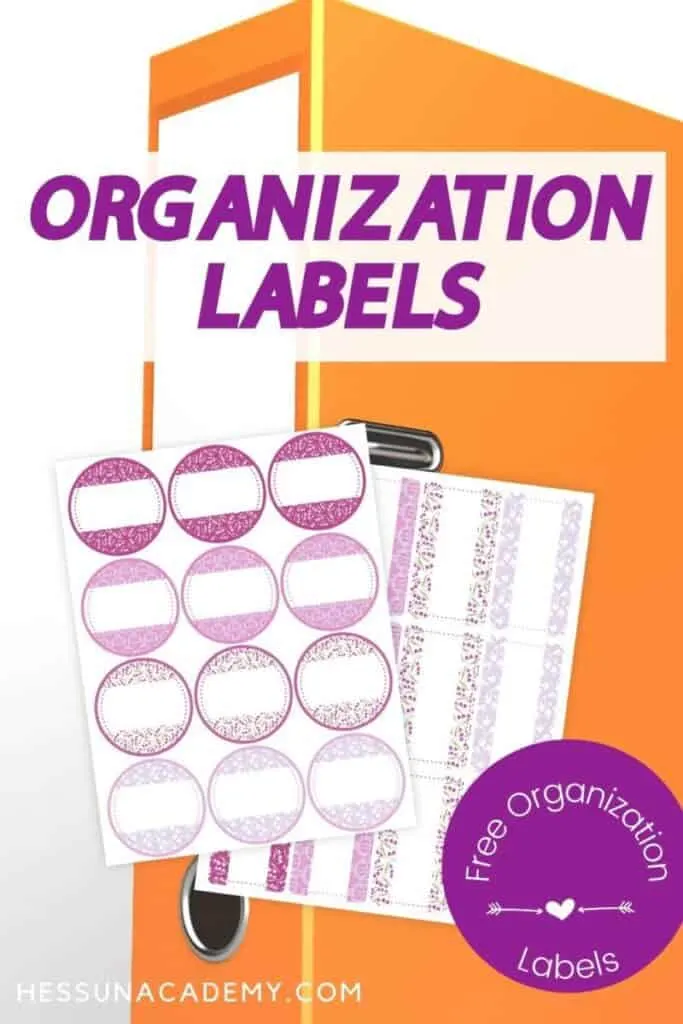
If you need something with which to label your binders and what-nots, I’ve got some free storage labels here for you. Perfect for organizing all of your resources.

Useful Homeschool Organization Labels to Consider
- Age/grade – Organizing books and curriculum by age and grade makes it easy to keep track of multiple grade levels at the same time. Just label your bookshelf or basket according to which age range it is for, and your kids will know exactly which section to go for when searching for learning materials.
- Genre/subject – If your homeschool doesn’t follow strict grade levels, or if your students are on grade levels that are not in conjunction with their public schooling peers, then organizing based on genre might work better for you. This allows your students to gravitate towards whatever is interesting to them specifically.
- Most used – This is an organizational method that I personally have found success with in the past, especially in regards to curriculum. When you have two or three curriculums you are focusing on in a specific school year, the others that you don’t use as often can go on higher, dustier shelves for use at a later time.
- Brand – If you have accumulated many different curriculums over the years, you might find that you gravitate towards one brand or curriculum maker over others, and those are the tools that you will want to have handy and easy-access.
- Size – Organizing by size is particularly useful if you don’t have a bookshelf to store your books and curriculum on, but rather you use bins or baskets. The physics is simple – putting bigger, bulkier books on the bottom will make for a sturdier stack that is safer to move around.
Baskets and bins are great solutions if you’re looking to store certain books and materials away from the main stash. For example, you may incorporate a morning basket for the books you want to read as a family.
A bin can be used to store books used by an individual child. And the great thing about baskets and bins is they can be tucked away out of sight until you need them, or stacked on top of each other to save space.
Organizing with Binders
If you have curriculum or workbooks that come with a lot of loose papers, binders are the way to go. Binders are handy for keeping papers safe from wrinkling or getting lost, and they also make it easier to store your stacks of papers upright, such as on a bookshelf.
Binder Organization Ideas
- Use a big and bold binder as your main source for storing instructor guides, teacher’s notes, and any open and teach kind of printables.
- Use smaller binders for holding a few weeks of lessons at a time. Most moms find that 4-6 weeks worth of lessons in one binder is just enough and not overwhelming.
- Get a large binder for each subject and before long, you will have a memory book filled with all of your science, math, history, etc lessons from over the years.
- Give each child a binder of their own to store any loose leaf curriculum pages. Then, have them store it in their own section on the bookshelf.
Totes and Containers
Totes and containers are just about every homeschooling mom’s weakness. When it comes to books and curriculum storage, there’s a tote for that! In fact, totes are a popular hack for anybody sharing homeschool curriculum tips and tricks. Using totes and containers are ideal when you are looking to store quite a bit of resources together.
Depending on the size, totes and containers can be stored on bookshelves, under beds, or even in the closet. I recommend using these to store materials and resources that you won’t be using as often. This way, as your children grow and younger children age into an older curriculum, or you find you want to go back and review an older piece of material, everything is stored away for easy access.
There are many storage solutions to choose from; however, the idea is to keep your homeschool learning space clutter-free and usable for everyone involved. Books and curriculum can pile up and over time become a huge mess.
- Free Printable Valentine Multiplication Worksheets - June 4, 2025
- Free Printable Martin Luther King, Jr. Word Scramble - June 4, 2025
- Digital Math Curriculum | Pros, Cons, and Options - June 4, 2025
Chris James
Wednesday 9th of November 2022
Great read!! Thanks for sharing such a great blog, blog like these is really helpful.
Ashley Wright
Wednesday 9th of November 2022
Great read!! Keep sharing such a great blog, blog like these is really helpful.